What is a heritage overlay and what does it mean for homeowners?
A heritage overlay is a planning control that applies to properties identified as having historical, architectural, or cultural significance, restricting certain types of external alterations without council approval. In the Inner West, these overlays affect thousands of homes across suburbs like Haberfield, Annandale, Stanmore, and Petersham. If your property falls within a heritage conservation area (HCA), you need to understand what work requires approval and what you can still do freely.
Heritage overlays are mapped in the Inner West Local Environmental Plan (LEP) and Development Control Plan (DCP). They apply to individual heritage items (specific listed buildings) and to broader conservation areas where the collective streetscape character is protected. For homeowners, this means any visible changes to your property’s street-facing elements may require a Development Application and heritage impact assessment.
The good news is that heritage controls do not prevent renovation entirely. They guide how change happens, particularly to elements visible from the public domain. Experienced builders in Marrickville, Stanmore, and surrounding heritage-rich suburbs work within these frameworks daily.
Which Inner West suburbs have heritage conservation areas?
The Inner West local government area contains more than 30 heritage conservation areas spread across suburbs including Haberfield, Annandale, Stanmore, Petersham, Summer Hill, Dulwich Hill, Ashfield, Leichhardt, and Newtown. Some suburbs are almost entirely covered by conservation area controls.
What makes Haberfield’s heritage controls unique?
Haberfield is one of Australia’s earliest planned “garden suburbs” and carries some of the strictest heritage protections in the Inner West. Developed from 1901 by Richard Stanton, the suburb was designed as a cohesive Federation-era residential estate. Almost every property sits within the Haberfield Heritage Conservation Area, and the controls extend to front fences, garden layouts, and even paint colours in some cases. If you are considering renovating a Federation home in Sydney, Haberfield demands careful planning from the outset.
What heritage areas exist in Annandale and Leichhardt?
Annandale contains multiple heritage conservation areas characterised by Victorian Italianate terraces, while Leichhardt features a mix of Federation cottages and interwar bungalows under heritage protection. The Annandale HCAs cover much of the suburb’s residential streets, particularly the rows of intact terrace houses along Johnston Street, Nelson Street, and surrounding blocks. Leichhardt’s conservation areas focus on pockets of consistent architectural character from the early 1900s. Leichhardt home builders familiar with these areas understand how to retain front presentations while transforming rear living spaces.
How do heritage controls apply in Stanmore, Petersham, and Summer Hill?
Stanmore, Petersham, and Summer Hill each contain conservation areas that protect their distinctive late-Victorian and Federation streetscapes. Stanmore’s HCA covers streets lined with decorative Federation homes featuring detailed timber fretwork, tessellated tile verandahs, and intact rooflines. Petersham’s conservation areas include pockets of Victorian workers’ cottages alongside grander Federation residences on wider lots. Summer Hill’s heritage areas protect a consistent collection of Federation and Californian bungalow homes along tree-lined streets near the village centre.
Many homeowners in these suburbs are drawn to renovating Californian bungalows, a style particularly common in Summer Hill and parts of Dulwich Hill where interwar development created whole streets of these characterful homes.
What about Dulwich Hill and surrounding areas?
Dulwich Hill’s conservation areas protect clusters of Federation and interwar housing, particularly along streets near the light rail corridor and the suburb’s commercial strip. The heritage character here includes a mix of freestanding bungalows on generous blocks, semi-detached pairs, and some terrace rows closer to Marrickville. Builders in Dulwich Hill regularly work on rear extensions and internal reconfigurations that leave heritage frontages untouched while creating modern open-plan living behind the original dwelling.
What work triggers a heritage assessment?
Any alteration visible from the public domain, including changes to facades, rooflines, front fences, chimneys, verandahs, and window configurations, will typically trigger a heritage assessment as part of a Development Application. The Inner West DCP specifies that work affecting the “significance” of a heritage item or the “character” of a conservation area requires council evaluation.
Specific triggers include:
- Demolition or alteration of street-facing facades
- Changes to original roof forms visible from the street
- Removal or modification of decorative elements (fretwork, finials, corbels, mouldings)
- New upper-storey additions visible from the public domain
- Front fence alterations that change the established streetscape pattern
- Tree removal where trees contribute to heritage character
Council will assess whether proposed changes are compatible with the heritage character, and a Statement of Heritage Impact (SoHI) prepared by a heritage consultant is usually required. This document evaluates the impact of your proposal on the item’s significance or the conservation area’s character.
How can rear additions and internal renovations avoid heritage restrictions?
Rear additions and internal renovations that do not affect the heritage significance of a property or its contribution to a conservation area can often proceed with fewer heritage-related hurdles. The principle underpinning most heritage controls is protecting what is visible and historically meaningful from the public realm. Work concealed behind the original building envelope is generally assessed on standard planning merit rather than heritage grounds.
Common projects that may avoid heritage restrictions include:
- Ground-floor rear extensions that sit behind the existing roofline
- Internal layout changes, kitchen and bathroom renovations
- New openings on rear elevations not visible from the street
- Rear courtyards, decking, and landscaping
- Like-for-like replacement of deteriorated original materials (sometimes exempt)
That said, “avoiding heritage restrictions” does not always mean avoiding a DA altogether. The scope of work, its visibility, and the specific controls in your DCP section all determine the approval pathway. Understanding development application service is important before committing to a design direction.
What are the DA requirements for heritage properties compared to CDC eligibility?
Properties that are individually heritage-listed or located within heritage conservation areas are generally excluded from the Complying Development Certificate (CDC) pathway and must lodge a Development Application with Inner West Council. This is one of the most common surprises for new homeowners in heritage suburbs.
Under the State Environmental Planning Policy (Exempt and Complying Development Codes), complying development provisions do not apply to heritage items or properties within HCAs for most external works. This means:
- You cannot use a private certifier to approve external alterations
- Your application goes through council’s planning team and may be referred to a heritage advisor
- Timeframes are longer (typically 40 to 60 days for straightforward heritage DAs)
- A Statement of Heritage Impact adds to consultant costs
- Neighbour notification may apply
Some internal works and very minor external repairs may still qualify as exempt development, even on heritage properties. Your builder and planning consultant can advise on the boundary between exempt work and work requiring approval. For a broader look at approval processes for heritage properties across Sydney, our guide to heritage renovation in Sydney covers the key principles.
How does Dura Group approach heritage-sensitive renovation?
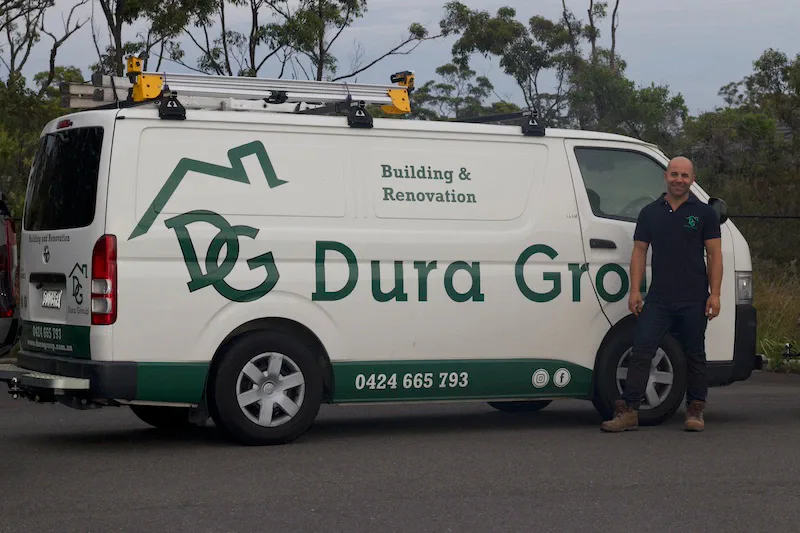
Dura Group Building & Renovations approaches heritage projects with a “retain and reveal” philosophy: preserve the original facade and street presentation while creating contemporary, functional living spaces behind and below the heritage envelope. This strategy aligns with council expectations and delivers the modern home our clients want without sacrificing the character that drew them to the Inner West in the first place.
Our typical approach on heritage-affected properties involves:
- Early consultation with heritage advisors before design development
- Photographic documentation of existing conditions and original fabric
- Retention of front rooms, hallways, ceiling roses, fireplaces, and original joinery where intact
- New rear pavilion-style additions that step down or set back from the original roofline
- Material selections that complement without mimicking the original building
- Careful demolition practices that protect retained fabric during construction
Dura Group has completed heritage renovations across Inner West renovation projects ranging from modest rear extensions on Annandale terraces through to full second-storey additions on Stanmore Federation homes. Each project required careful handling of heritage controls, and our relationships with local heritage consultants help streamline the approval process. We handle the full lodge a development application for heritage properties, so you can focus on the design rather than the paperwork.
For Newtown building projects and homes in Enmore, Marrickville, and surrounding suburbs, we see a recurring pattern: owners purchase character homes precisely for their period features, then discover they need a builder who understands both the heritage approval process and the technical demands of working with older construction. Dura Group fills that role across the Inner West.
What local architectural eras define the Inner West’s heritage character?
The Inner West’s heritage character spans multiple architectural eras, from mid-Victorian terraces of the 1870s through Federation homes of 1890 to 1915, interwar Californian bungalows of the 1920s and 1930s, and pockets of Art Deco from the 1930s and 1940s.
Each era presents different renovation considerations:
- Victorian terraces (Annandale, Newtown, Petersham): Narrow frontages, party walls, limited natural light to middle rooms, cast iron lacework, and Italianate parapets. Rear extensions and light courts are common renovation solutions.
- Federation homes (Haberfield, Stanmore, Summer Hill): Wider lots, decorative timber verandahs, complex roof forms with terracotta tiles, and detailed interior joinery. These homes offer more scope for side and rear extensions.
- Californian bungalows (Dulwich Hill, Summer Hill, Ashfield): Broad fronted with deep eaves, tapered verandah columns, and spacious but often dark floor plans. Rear open-plan extensions paired with skylights transform these homes.
Builders in Ashfield and surrounding suburbs encounter all three eras within a few streets of each other. Understanding the construction methods and materials of each period is as important as working through the planning controls.
How can you start your heritage renovation in the Inner West?
Start by confirming your property’s heritage status through the Inner West Council online mapping tool, then engage a builder experienced in heritage-affected properties before finalising your design brief. Early advice saves time and money by identifying constraints and opportunities before you invest in architectural drawings that may not receive approval.
Dura Group offers obligation-free initial consultations for homeowners considering renovations in heritage conservation areas across the Inner West. We can review your property’s heritage context, discuss what is likely to be achievable, and recommend the right consultants to support your application.
If you are ready to discuss your heritage renovation project, get in touch with Dura Group to arrange a site visit and initial conversation about your home.

Mark Dura is the founder of Dura Group Building & Renovations, a licensed builder (Lic 381531C) with 27+ years of experience in residential renovations, home extensions, and knockdown rebuilds across Sydney. Mark oversees every project from design through to completion.