A BASIX certificate is a condition of lodgement for most major residential building work in NSW, and councils and private certifiers reject applications submitted without one. We manage BASIX compliance for renovation and extension projects across the Sutherland Shire, Bayside, Georges River, Inner West and Randwick council areas, building the requirements into the design phase so your approval stays on track.
BASIX at a glance
| Renovation trigger | Alterations and additions valued at $50,000 or more |
| Pool and spa trigger | Total volume above 40,000 litres |
| What it assesses | Water efficiency, energy efficiency, thermal comfort |
| Thermal standard | Minimum 7-star NatHERS rating since 1 October 2023 |
| Certificate validity | Lodge within 3 months of generation, then valid for the life of the application |
| Administered by | NSW Department of Planning, Housing and Infrastructure via the NSW Planning Portal |
| Legal basis | Environmental Planning and Assessment Act 1979 and the Sustainable Buildings SEPP |
What is a BASIX certificate?
A BASIX certificate is the official document confirming your proposed residential development meets the NSW Government’s sustainability targets for water use, energy consumption and thermal performance. BASIX stands for Building Sustainability Index. The scheme started in July 2004 and now operates under the Environmental Planning and Assessment Act 1979 and the Sustainable Buildings SEPP. The NSW Department of Planning, Housing and Infrastructure runs the assessment through an online tool on the NSW Planning Portal, and the certificate it generates travels with your development application or fast-track CDC approval as a legal part of the submission.
The certificate is tied to your specific design. Change the layout, glazing, insulation or nominated systems after generating it and you need a revised certificate before lodgement.
Who needs a BASIX certificate?
Homeowners proposing a new dwelling, alterations and additions valued at $50,000 or more, or a pool or spa with a total volume above 40,000 litres need a BASIX certificate, according to the NSW Planning Portal. In practice that covers:
- New houses, duplexes and townhouses
- Knockdown rebuild projects (see our guide on knockdown rebuild costs in Sydney)
- Ground floor extensions and upper storey additions past the cost trigger
- Large pools and spas, with or without other building work
Internal renovations below the cost trigger, such as a standard kitchen or bathroom upgrade, do not require a certificate. Confirm the estimated cost of works early, because scope growth during design pushes projects past the trigger, and the safest time to check is during the council approval process planning stage rather than at lodgement.
What changed on 1 October 2023?
BASIX standards increased on 1 October 2023 to align with the National Construction Code 2022. The thermal comfort standard rose to a minimum 7-star NatHERS rating, up from an average of 5.5 stars, and energy targets tightened by location and building type. A new materials index now reports the embodied emissions of building materials, without a set target. The water standard did not change.
This matters for anyone dusting off older plans. A design that passed BASIX before the increase fails against the current targets, so plans drawn before late 2023 need reassessment before you lodge.
What does BASIX assess?
BASIX assesses three categories: water, energy and thermal comfort. Each category carries a target your design meets or exceeds based on climate zone and dwelling type, and the tool scores all three together before a certificate is issued.
Water efficiency
The water section measures projected potable water use against a benchmark and rewards designs that cut consumption. Effective measures include:
- Rainwater tanks connected to toilets, laundry or garden irrigation
- Water-efficient showerheads, taps and toilets
- Native or low-water landscaping
- Hot water systems that reduce water waste
For homes in the Sutherland Shire and Georges River council areas, rainwater tanks are one of the most effective paths to the water target given the roof areas and lot sizes common across both LGAs.
Energy efficiency
The energy section scores the projected energy use of the whole home: heating, cooling, hot water, lighting, and pool or spa equipment. Solar photovoltaic panels and heat pump hot water systems deliver the largest score improvements for a detached home, and good passive design reduces the heating and cooling loads that drive the score in the first place. LED lighting throughout and efficient appliances round out the section.
Thermal comfort
The thermal comfort section rates how well the building envelope holds a comfortable temperature without mechanical heating and cooling. It weighs insulation R-values, glazing type, orientation, shading and cross-ventilation. Coastal and inland sites perform differently: a design that works on a breezy Cronulla block needs different shading and ventilation strategies on a sheltered inland site in Kogarah or Menai.
When do you lodge the BASIX certificate?
The BASIX certificate is lodged with your development application or complying development certificate, and consent authorities reject submissions without it. A certificate must be lodged within 3 months of generation or a new one is required, as set out on the NSW Planning Portal. Once lodged, it stays valid for the life of the application, and the BASIX commitments become conditions of consent that your certifier checks during construction.
The sequence runs:
- Your designer prepares preliminary plans
- An accredited assessor runs the BASIX assessment against those plans
- The certificate is generated and lodged with your DA or CDC
- The commitments become conditions of consent on approval
- The certifier verifies every commitment is built as specified before issuing the occupation certificate
How does BASIX affect your home design?
BASIX shapes decisions about orientation, window placement, insulation, materials and the systems you install. Address it early and the targets cost little; retrofit compliance into finished plans and you pay for redesign. Common design impacts include:
- Larger or repositioned eaves shading north and west-facing windows
- Upgraded glazing, from standard aluminium frames to thermally improved frames with low-E glass
- Insulation above minimum NCC levels in walls and ceilings
- A rainwater tank, which needs allocated space on the lot
- Roof design that accommodates solar panels
For renovations, BASIX applies to the new or altered portions of the dwelling, and the assessor considers how the new section interacts with the existing structure. This is particularly relevant for the 1950s to 1980s brick veneer and fibro homes common across the Georges River and Sutherland Shire areas, where original construction carries minimal insulation.
How much does a BASIX assessment cost?
A BASIX assessment carries two costs: the NSW Government fee charged when the certificate is generated on the NSW Planning Portal, and the accredited assessor’s fee for modelling and data entry. Assessor fees scale with complexity, so a single-storey addition costs less to assess than a two-storey custom home or a project on a difficult site. Revising an issued certificate for the same property and project incurs no additional government charge.
The design decisions behind a passing score are the real cost item. Upgraded glazing, extra insulation, heat pump hot water and solar panels add to the build price and reduce running costs over the life of the home. Some of these items qualify for NSW renovation grants and rebates, particularly energy-efficient systems and solar. We itemise BASIX-related costs in our quotes so the full figure is visible before you commit.
What happens if your design does not pass BASIX?
A design that misses the targets gets modified until it passes; there is no pathway to approval without a passing certificate. Common fixes include:
- Adding or upsizing solar panels
- Switching to a heat pump or solar hot water system
- Increasing insulation R-values
- Upgrading window glazing
- Connecting a rainwater tank to more outlets
- Improving natural ventilation in the floor plan
Each fix is cheaper on paper than on site. That is the whole argument for handling BASIX at design stage.
How we handle BASIX at Dura Group
We address BASIX during initial design, not as an afterthought once plans are drawn. Mark brings more than 27 years of residential construction experience to this stage, and the process runs the same way on every project:
- We discuss orientation, lot constraints and your priorities at the first consultation
- We coordinate with BASIX assessors before plans are finalised
- We recommend measures that meet the targets without over-capitalising
- We factor every BASIX-related item into the quote upfront
- We check each commitment is installed correctly for final certification
For projects in the Shire, our familiarity with Sutherland Shire council approvals means we anticipate the sustainability expectations specific to the area rather than reacting to them.
BASIX tips for homeowners in Sydney’s south
Local climate and site conditions directly influence your BASIX outcome, and the same design scores differently from suburb to suburb. Practical tips for the Sutherland Shire and Georges River regions:
- Maximise northern orientation where the lot allows. North-facing living areas gain free winter warmth and shade easily in summer.
- Use coastal breezes on exposed sites. Cross-ventilation cuts cooling loads on blocks near the water.
- Position the rainwater tank early. Placement affects plumbing runs and cost.
- Choose light-coloured roofing on west-facing planes to reduce heat absorption.
- Invest in glazing before gadgets. High-performance windows cut heating and cooling loads year-round and outlast every appliance on the score sheet.
Frequently asked questions about BASIX
Does BASIX apply to kitchen and bathroom renovations?
Internal-only renovations such as kitchen and bathroom upgrades sit below the BASIX cost trigger in most projects and do not require a certificate. BASIX applies once the works pass the cost trigger or alter the building envelope through new windows, insulation or roofing, so confirm the position with your certifier before lodgement.
Do I need a new BASIX certificate if I change my plans?
A revised certificate is required whenever the layout, glazing, insulation or nominated systems change after the certificate is generated. Revising a certificate for the same property and project attracts no additional government charge on the NSW Planning Portal, and the revised version replaces the original with your consent authority.
Can I complete a BASIX assessment myself?
The BASIX tool is publicly accessible through the NSW Planning Portal, and the DIY method suits simple single dwellings. Complex designs, multi-dwelling projects and any design that fails the DIY thermal comfort criteria require an accredited assessor, whose modelling also prevents certificate errors that surface at inspection stage.
What is the difference between BASIX and NatHERS?
NatHERS is the national scheme for rating a home’s thermal performance in stars, while BASIX is the NSW compliance pathway that residential approvals run through. BASIX sets its thermal comfort standard by reference to NatHERS ratings, so an accredited NatHERS assessment feeds directly into the BASIX certificate for most new dwellings.
Start your renovation with BASIX handled from day one
We work with homeowners across the Sutherland Shire and Georges River areas, including builders in Cronulla, Menai home builders, and Kogarah builders. Get in touch to talk through your renovation or extension, and we will build the BASIX requirements into your plans, your quote and your approval pathway from the first consultation.
BASIX thresholds, targets and fees are set by the NSW Government and change over time. This article reflects the requirements current at July 2026. Confirm the rules that apply to your specific project with your council, private certifier or accredited BASIX assessor.

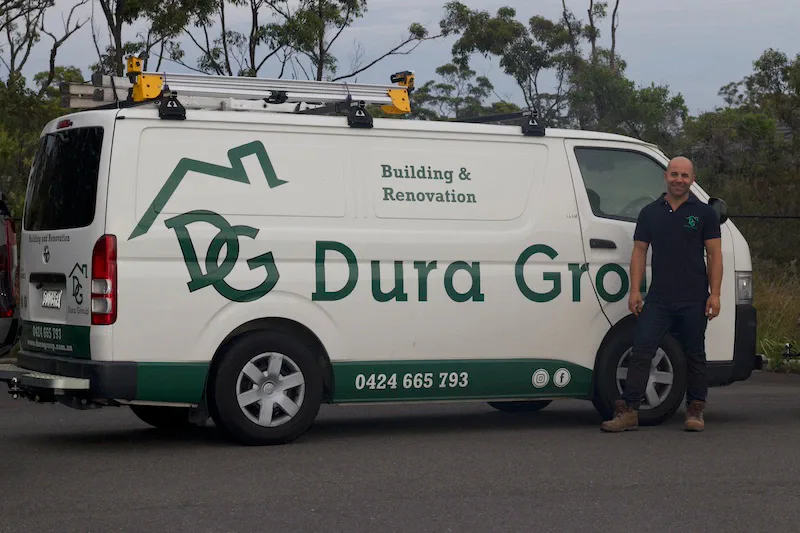
Mark Dura is the founder of Dura Group Building & Renovations, a licensed builder (Lic 381531C) with 27+ years of experience in residential renovations, home extensions, and knockdown rebuilds across Sydney. Mark oversees every project from design through to completion.