What is the council approval process in Sydney?
The council approval process in Sydney is the series of steps a homeowner must complete before legally building, extending, or significantly renovating a property. Depending on your project scope, location, and local council requirements, you will need either a Development Application (DA) or a Complying Development Certificate (CDC). Understanding which pathway applies to your project can save months of delays and thousands of dollars in avoidable costs.
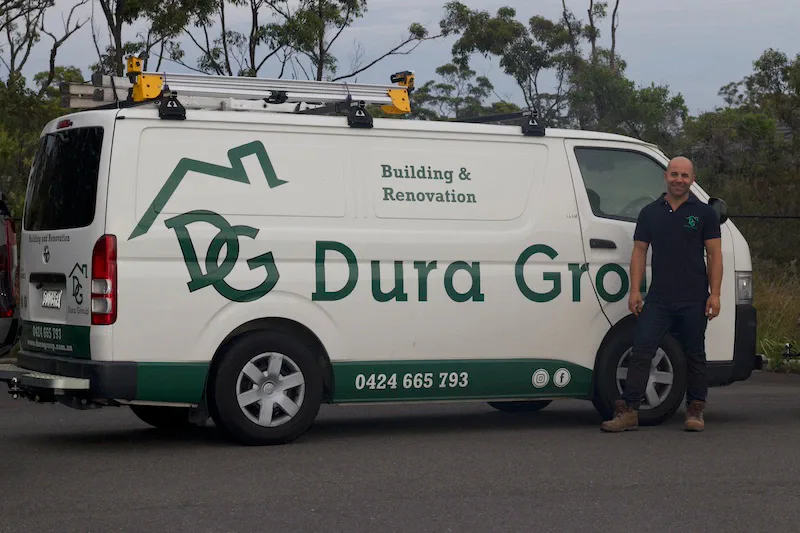
At Dura Group Building & Renovations, we guide homeowners through the approval process from the first conversation to the day construction begins. Mark, with over 25 years of building experience across Sydney, has seen every variation of the approval process – including the quirks of five different council areas. This guide walks you through every step so you know exactly what to expect.
What is the difference between a DA and a CDC?
A Development Application (DA) is a formal request to your local council for permission to carry out a building project, while a Complying Development Certificate (CDC) is a faster, private-certifier pathway for projects that meet pre-set state standards. Choosing the right pathway upfront is one of the most important decisions in any building project.
We’ve written a detailed breakdown on CDC approvals with Dura Group if you want to understand both pathways before reading further. In short: if your project is straightforward, a CDC is usually quicker. If your property is in a heritage conservation area, a bushfire-prone zone, or subject to flood planning constraints, you will almost certainly need a DA.
Which Sydney councils does this guide cover?
This guide covers the five council areas where Dura Group works most regularly: Sutherland Shire Council, Georges River Council, Inner West Council, City of Canada Bay, and Canterbury-Bankstown Council. Each council has its own local environment plans (LEPs), development control plans (DCPs), and processing timelines. What’s permitted in one area may require additional documentation in another.
Step 1: Confirm your project type and council requirements
The first step is to identify exactly what you are building and then check your council’s specific controls for that project type. Every council publishes its LEP and DCP online. These documents set out floor space ratios, setback rules, height limits, and any heritage or environmental constraints that apply to your land.
A few things to confirm early:
- Is your property in a heritage conservation area? Suburbs like Haberfield (City of Canada Bay), Oatley (Georges River), and Stanmore (Inner West) all have heritage overlays that restrict alterations to external facades, rooflines, and materials.
- Is your land classified as bushfire-prone? Properties in Heathcote, Engadine, and Waterfall fall within Sutherland Shire Council’s bushfire-prone land maps. This triggers additional requirements under Planning for Bush Fire Protection 2019.
- Does your property sit within a flood planning area? Land near the Georges River and its tributaries, particularly in the Georges River and Canterbury-Bankstown council areas, is subject to flood planning levels that affect floor heights and structural requirements.
Our builders in Cronulla, Cronulla, and throughout the Sutherland Shire have worked through all of these overlay requirements many times over. Getting clarity on these constraints before engaging a draftsperson saves time and redesign costs.
Step 2: Engage a draftsperson, designer, or architect
Once you understand your project scope and council constraints, the next step is to have your plans drawn up by a qualified draftsperson or architect. For most residential extensions, additions, and knockdown rebuilds, a building designer with experience in your council area will be sufficient. For complex heritage sites or large custom builds, an architect may be required or preferred.
The question of who designs your project connects to a broader choice: Design and Build vs Architect and Builder. Both have merit depending on your priorities, budget, and the complexity of your project.
Your plans need to meet the specific submission requirements of your council. Inner West Council, for example, requires a detailed Statement of Environmental Effects (SEE) and often requests shadow diagrams and streetscape elevations even for single-storey additions. Sutherland Shire Council has its own DCP controls around tree preservation and stormwater management that must be addressed in your documentation.
Step 3: Pre-DA consultation (for Development Applications)
Many councils in Sydney offer a pre-DA meeting service where you can discuss your proposal with a council planner before formally lodging your application. This is especially useful for larger or more complex projects, heritage-listed properties, or sites with multiple constraints.
Pre-DA meetings are available through all five councils. They are not free in most cases, and response timeframes vary. However, the feedback you receive can reshape your design before you spend money on detailed drawings, making the investment worthwhile.
For building projects in the Inner West, where heritage sensitivities and neighbour notification periods can extend a DA timeline, a pre-DA meeting can be the difference between a 12-week and a 20-week approval process.
Step 4: Lodge your application
All Development Applications in New South Wales are lodged through the NSW Planning Portal, regardless of which council area you are in. CDCs are lodged directly with an accredited certifier, who then notifies the relevant council.
Your lodgement package for a DA will typically include:
- Site plan, floor plans, elevations, and sections
- Statement of Environmental Effects
- BASIX certificate (for new dwellings and most residential additions)
- Survey plan
- Shadow diagrams (where required)
- Heritage impact statement (if applicable)
- Bushfire assessment report (if applicable)
- Flood assessment report (if applicable)
- Stormwater management plan
Incomplete lodgements are one of the most common causes of delays. Councils will issue a “stop the clock” notice while they await missing documents, which can add weeks to your timeline without the clock counting down on their statutory assessment period.
What are the typical DA timeframes for each council?
DA assessment timeframes vary across Sydney’s councils, and in practice, most residential DAs take longer than the statutory 40-business-day target. Here is a realistic guide based on our experience across the five council areas:
- Sutherland Shire Council: Typically 8 to 16 weeks for standard residential DAs, though bushfire and tree-related referrals can push this out further. We’ve seen complex projects in Engadine and Heathcote take up to 6 months where Rural Fire Service referrals are involved.
- Georges River Council: Generally 10 to 18 weeks. Properties near the Georges River with flood planning constraints often require referral to external agencies, extending the timeline. Our building in the Georges River Area guide covers local requirements in more detail.
- Inner West Council: One of Sydney’s busiest councils for DAs. Standard residential projects often take 16 to 24 weeks. Heritage-listed properties in Stanmore or Marrickville can take longer due to heritage advisor review requirements. If you’re planning work in Marrickville, our Marrickville builders page covers what to expect locally.
- City of Canada Bay: Typically 12 to 20 weeks. Haberfield and other conservation areas require heritage impact statements and are assessed more carefully, which can extend timelines. Our Concord builders page outlines what’s common in this part of the Canada Bay area.
- Canterbury-Bankstown Council: Ranges from 10 to 20 weeks depending on site complexity and any flood planning overlays. Properties near waterways and the Georges River catchment are subject to additional assessment requirements.
CDCs, by contrast, are assessed by a private certifier and can be turned around in as little as 10 business days for straightforward projects, provided all documentation is correct at lodgement.
Step 5: Respond to requests for information (RFIs)
During the assessment period, your council’s planner may issue a Request for Information (RFI) asking for additional documents, amended plans, or expert reports. Responding promptly is essential. Every day your RFI sits unanswered is a day the clock stays paused on your DA.
Your designer or builder should be across the RFI and able to coordinate responses quickly. This is one of the reasons we recommend working with a builder experienced in your council area before you even lodge. When we manage a project from concept through to construction, we can flag likely RFI triggers early and address them in the original submission.
Step 6: Notification and neighbour objections
Most DAs for residential additions and extensions are publicly notified, meaning your neighbours have a formal period to review your plans and lodge objections. The standard notification period is 14 days, though councils can extend this for more sensitive proposals.
Objections do not automatically stop a development. Council planners assess them on planning merit. However, if objections raise legitimate concerns about privacy, overshadowing, or heritage impact, they can trigger additional conditions of consent or require design modifications.
In heritage conservation areas like Haberfield and Stanmore, neighbour interest in proposals is generally higher. Clear design documentation that proactively addresses potential concerns will reduce the risk of objections causing delays.
Step 7: Receive your consent and understand your conditions
When your DA is approved, you will receive a Notice of Determination outlining your development consent and the conditions that must be satisfied before and during construction. Read every condition carefully. Some require action before any work begins; others are ongoing obligations during the build.
Common conditions include:
- Appointment of a Principal Certifier (PC) before work starts
- Construction Certificate (CC) approval before any building commences
- Erosion and sediment control measures
- Specific hours of construction
- Tree protection fencing
- Staged inspections at specified milestones
Understanding your conditions is as important as understanding your consent. We always walk our clients through their approval document before mobilising on site. You can read more about what comes next in The Home Building Process.
Step 8: Obtain your Construction Certificate
A Construction Certificate (CC) is a separate approval that confirms your building plans and specifications comply with the Building Code of Australia (BCA) and the conditions of your development consent. It must be issued before any physical work begins on site.
The CC can be issued by either the council or a private certifier. Private certifiers are generally faster. Your builder will typically coordinate this with you once construction drawings have been finalised. Understanding the costs involved at this stage is part of planning your overall budget. See our Building Costs in Sydney: 2026 Price Guide for context on what approval-related costs typically represent within a total project budget.
Step 9: Appoint your Principal Certifier and start construction
Your Principal Certifier (PC) is the person responsible for conducting critical stage inspections throughout the build and in the end issuing your Occupation Certificate when construction is complete. They must be appointed before any work commences and their details lodged on the NSW Planning Portal.
The PC may be your council or an accredited private certifier. Private certifiers are commonly used for residential projects due to faster inspection response times. Your builder should have established relationships with local certifiers and can recommend one suited to your project type and council area.
For work in Hurstville and the surrounding Georges River suburbs, our Hurstville builders team is familiar with the local certifiers and council inspection processes.
How do I choose the right builder for the approvals process?
The right builder will have direct experience with your specific council area and will be able to advise on approval pathways, documentation requirements, and likely timelines before you spend money on plans. Choosing a builder who is unfamiliar with your council’s DCP can result in a design that doesn’t get approved or requires expensive changes after lodgement.
Our guide to How to Choose a Builder in Sydney walks through the key questions to ask at the quoting stage. When you meet with any builder, ask them specifically about their experience with DAs and CDCs in your area, how they handle RFIs, and who they recommend as a certifier.
At Dura Group, we have managed both Dura Group CDC approvals and CDC approval services across all five council areas. We can advise you on which pathway suits your project before you commit to either. If you’re planning to renovate in the Sutherland Shire, our local guide to Renovating in the Sutherland Shire covers council-specific considerations in detail. For Inner West projects, Renovating in the Inner West is worth reading before you begin.
What should I read before signing a building contract?
Before signing any contract, make sure you understand what is and isn’t included, how variations are handled, and what happens if council requires design changes after consent is granted. This is especially relevant in areas with heritage overlays or bushfire constraints, where unexpected conditions of consent can affect scope and cost.
Our guide to How to Read a Building Contract explains the standard clauses in plain language so you know what you are agreeing to before you sign. At Dura Group, we use fixed lump sum contracts with no hidden costs, and we explain every line item at the quoting stage.
Ready to start your council approval process?
The approval process doesn’t have to be stressful. With the right guidance, the right documentation, and a builder who knows your council area, most homeowners move through the process without major surprises. If you’re planning a build, extension, or renovation across Sutherland Shire, Georges River, Inner West, Canada Bay, or Canterbury-Bankstown, contact Dura Group Building & Renovations today. We’ll help you understand which approval pathway suits your project and what to prepare before lodging anything with council.

Mark Dura is the founder of Dura Group Building & Renovations, a licensed builder (Lic 381531C) with 27+ years of experience in residential renovations, home extensions, and knockdown rebuilds across Sydney. Mark oversees every project from design through to completion.