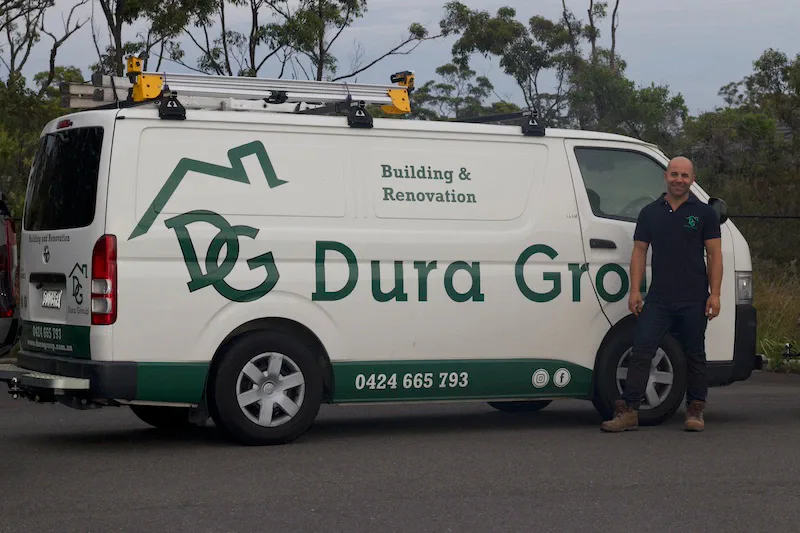
Heritage renovation in Sydney is one of the most rewarding types of building work we do, and also one of the most regulated. If your home is listed on a heritage register, sits within a conservation area, or is classified as a contributory item under a local environmental plan, the rules governing what you can and cannot do are very different from those that apply to a standard renovation. This guide explains how the process works, what to expect from council, and how Dura Group Building & Renovations approaches heritage projects across the Inner West, Georges River, and Canada Bay.
What does it mean for a home to be heritage listed?
A heritage listing places legal controls on how a property can be altered, extended, or demolished, with the aim of protecting its historic, aesthetic, or cultural significance. In NSW, listings appear on several registers. The State Heritage Register, maintained by Heritage NSW, covers items of state significance. Local environmental plans (LEPs) administered by your council cover items of local significance. The Section 170 register records government-owned heritage assets. Most residential homes that homeowners encounter fall under local LEP listings or sit within a heritage conservation area (HCA).
Being within a conservation area does not necessarily mean your home is individually listed. It means the street or precinct as a whole has heritage value, and your renovations must respect that character. The controls still apply, but the level of scrutiny depends on whether your home is a contributory item, a non-contributory item, or a listed heritage item in its own right.
Why can’t I use a CDC for a heritage renovation?
Complying Development Certificates (CDCs) are generally not available for heritage-listed properties or properties within heritage conservation areas. A CDC is a fast-track approval pathway that bypasses council, but it only applies when work fully meets a standard set of codes. Heritage work almost never meets those codes, because heritage controls are property-specific and require assessment of the particular significance of the building. The result is that virtually all heritage renovation work requires a full Development Application (DA) through your local council.
This matters because a DA involves a longer assessment period, may require a Statement of Heritage Impact, and will typically go to council’s heritage advisor for review. Understanding DA approvals with Dura Group before you start will save you from planning a project around the wrong timeline. For heritage properties, budget at least three to six months for the approval process, sometimes longer if the application requires additional reports or public notification.
Which Sydney areas have the most significant heritage controls?
The Inner West, parts of Canada Bay, and several suburbs within the Georges River area contain some of Sydney’s most intact and carefully regulated heritage streetscapes. The Haberfield Conservation Area is one of the most significant of all. Haberfield is widely recognised as one of Australia’s first garden suburbs, developed from around 1901 with a deliberate vision of Federation-style homes set within generous landscaped blocks. Inner West Council treats the Haberfield HCA with particular care, and any exterior work to a home in Haberfield will receive close scrutiny. Our team works regularly with homeowners on building projects in Haberfield and understands what council expects at each stage.
Stanmore has its own heritage precinct covering rows of Victorian and Federation homes along key streets. The Stanmore heritage precinct controls apply to front facades, fences, verandah details, and roofline character. Work we have completed for homeowners considering renovations in Stanmore typically involves careful matching of original materials and a detailed heritage report to support the DA.
Drummoyne, within the Canada Bay LGA, contains a strong concentration of Federation homes along the peninsular foreshore streets. The Canada Bay Council heritage map identifies contributory items throughout Drummoyne, Five Dock, and Rhodes. For homeowners planning home improvements in Drummoyne, the heritage overlay adds a layer of planning assessment that a standard renovation in a non-heritage street would not require.
In Newtown, the housing stock shifts toward Victorian terraces and semi-detached homes, many of which are either individually listed or sit within the Newtown heritage conservation area. The controls focus on maintaining original facades, cast iron lacework, and the consistent roofline of terrace rows. Homeowners exploring building work in Newtown often find that rear extensions are achievable with the right design, while front alterations face strict controls.
Oatley, within the Georges River LGA, contains a collection of individually listed heritage items, including early Federation and Interwar bungalows. If your home in Oatley is on the heritage schedule, council will assess any DA against the specific heritage significance of that property. We have experience supporting homeowners through renovation projects in Oatley where heritage considerations shaped the design from the outset.
What housing styles are most commonly subject to heritage controls in Sydney?
Federation homes, Victorian terraces, and Californian bungalows make up the majority of heritage-listed residential properties across inner Sydney.
Federation homes (roughly 1890 to 1915) are concentrated in Haberfield, Drummoyne, and Stanmore. They are recognised by their decorative timber fretwork, wraparound verandahs, red brick construction, terracotta tiled roofs, and double-hung sash windows. Heritage controls typically require that all of these elements be retained, repaired rather than replaced where possible, and matched in any new work.
Victorian terraces (roughly 1840 to 1890) are most common in Newtown, Erskineville, and Glebe. Cast iron verandah columns and lacework, rendered facades, and slate or corrugated iron rooflines are defining features. These terraces are often individually listed, and even minor works like changing a front door or removing a chimney require council approval.
Californian bungalows (roughly 1910 to 1940) are widespread across Dulwich Hill, Marrickville, and Ashfield. They feature low-pitched roofs, exposed rafter tails, wide front porches, and face brick or rendered brick construction. Many sit within conservation areas where the controls focus on maintaining the consistent streetscape character rather than the specific details of an individual home.
What are the specific constraints on heritage renovation work?
The four areas where heritage controls most frequently affect renovation plans are the front facade, original joinery, roofline matching, and materials selection.
Front facade retention is non-negotiable in most heritage assessments. Council will not approve works that remove, obscure, or significantly alter the original facade to the street. This applies to windows, verandahs, front doors, brick patterns, and decorative render. Even painting an unpainted brick facade can require approval in some conservation areas.
Original joinery, meaning the existing timber sash windows, panel doors, skirtings, and architraves inside the home, is valued as part of the heritage fabric. Heritage assessments often require that original joinery be retained or, where damaged beyond repair, replaced with timber profiles that match the originals in species, dimensions, and profile. Using aluminium replacement windows on a Federation or Victorian home will not be approved.
Roofline matching is required when extensions or additions are proposed. The pitch, material, and profile of any new roof section must be consistent with the original. On a Federation home with a terracotta tile roof, a new first floor addition will generally need to match that tile, not substitute Colorbond. The Heritage NSW guidelines and individual council development control plans (DCPs) set out the specific requirements.
Materials selection throughout the project is subject to review. This includes bricks, mortar colours, render profiles, timber species for any structural or architectural elements, and even paint colours in some conservation areas where a heritage colour palette is specified.
How does the Inner West Council heritage advisor process work?
Inner West Council employs heritage advisors who assess DA applications affecting heritage-listed properties and conservation areas, and who are available to meet with homeowners before lodgement. This pre-DA consultation is worth taking seriously. A 30-minute meeting with the heritage advisor can clarify what council will and will not support, saving months of back-and-forth after the application is lodged.
The heritage advisor’s role is to assess the impact of proposed works on the heritage significance of the item or conservation area. They work from a Statement of Heritage Impact, which is a report prepared by a qualified heritage consultant that identifies the significance of the property and assesses whether the proposed works are appropriate. For many DA applications in heritage areas, this statement is a mandatory document.
If you are renovating in the Inner West, understanding the local council’s heritage process before you engage an architect or builder will help you set realistic expectations for both the approval timeline and the design constraints.
Can I extend a heritage home?
Yes, extensions to heritage homes are regularly approved, provided the design is respectful of the original building’s character and scale. The key principle that heritage assessors apply is that new work should be distinguishable from the original but not dominating. A rear ground floor extension, for example, is often achievable because it does not alter the primary street-facing elevation. A first floor addition above the original roofline is more difficult to approve because it changes the height and profile visible from the street.
Our Ground Floor Extension Guide covers the general process for extending a home in detail. For heritage properties, the same structural and design considerations apply, with the additional layer of heritage assessment and, in most cases, a mandatory DA rather than a CDC pathway.
When planning an extension to a heritage home, the choice of procurement method matters. Bringing heritage expertise into the design stage early is important. Our guide on Design and Build vs Architect and Builder outlines the differences between these approaches, and for heritage work, we generally recommend engaging a heritage-experienced architect or draftsperson who can prepare the Statement of Heritage Impact alongside the architectural drawings.
How does Dura Group approach heritage renovation projects?
We treat heritage renovations as a specialised area of work that requires planning discipline, materials knowledge, and experience working within council approval processes. Mark has been building across the Inner West, Georges River, and Canada Bay for over 25 years. That experience includes Federation restorations in Haberfield and Stanmore, terrace rear extensions in Newtown, and bungalow renovations in Oatley and surrounds.
Our approach starts with the approval pathway. Before any design work is finalised, we assess whether the property is individually listed, sits within a conservation area, or is a contributory item, and we identify which council controls apply. This shapes everything from the design brief to the materials specification.
On site, heritage work requires a higher level of care with existing fabric. Original timber floors, pressed metal ceilings, decorative cornices, and original brickwork need to be protected during construction. Where original materials need to be removed temporarily for structural work, we catalogue and store them for reinstatement. This attention to the existing building is part of what sets heritage renovation apart from a standard project.
We are transparent about costs from the start. Heritage work is not the same price as standard renovation work, because the materials, the approval process, and the level of care required are all different. Our renovation cost guide and our 2026 Sydney building costs price guide give you a framework for understanding cost drivers before you commit to anything. When you engage us, you receive a fixed lump sum quote with no hidden costs, so the budget is clear before work begins.
How do I choose the right builder for a heritage renovation?
The right builder for a heritage project has direct experience with council approval processes, knows how to work with original materials, and can manage the additional complexity that heritage controls introduce. Our guide on how to choose a builder in Sydney covers the key questions to ask any builder before you commit. For heritage work, add these to your list: Have you completed heritage DA applications with this council before? Can you provide references from heritage renovation projects? Do you use subcontractors who have experience with heritage-compatible materials and techniques?
If you are considering work in the Georges River area, our page on building in the Georges River Area includes local planning context that applies to heritage and non-heritage projects alike.
At Dura Group, Mark personally oversees every project. That means the person who understands the heritage constraints, has spoken to the heritage advisor, and has reviewed the Statement of Heritage Impact is also the person on site managing the build. There is no disconnect between the planning stage and the construction stage.
For more about how we can help, visit our Dura Group DA approvals page.
Ready to start your heritage renovation?
If you own a heritage-listed home or a property within a conservation area across the Inner West, Georges River, or Canada Bay, we would be glad to talk through your project before you commit to anything. Contact Dura Group Building & Renovations to arrange a no-obligation consultation about your heritage renovation. We work across Haberfield, Stanmore, Newtown, Drummoyne, Oatley, and the surrounding suburbs, and we understand what each council requires.

Mark Dura is the founder of Dura Group Building & Renovations, a licensed builder (Lic 381531C) with 27+ years of experience in residential renovations, home extensions, and knockdown rebuilds across Sydney. Mark oversees every project from design through to completion.