Most homeowners facing this decision come to us with the same question: do we stay and renovate, or knock it all down and start fresh? The honest answer depends on a combination of structural condition, asbestos extent, layout limitations, block potential, and renovation cost relative to rebuild cost – and in the Sutherland Shire and Georges River areas, where fibro cottages and post-war brick homes sit on generous lots, the answer is rarely obvious from the street.
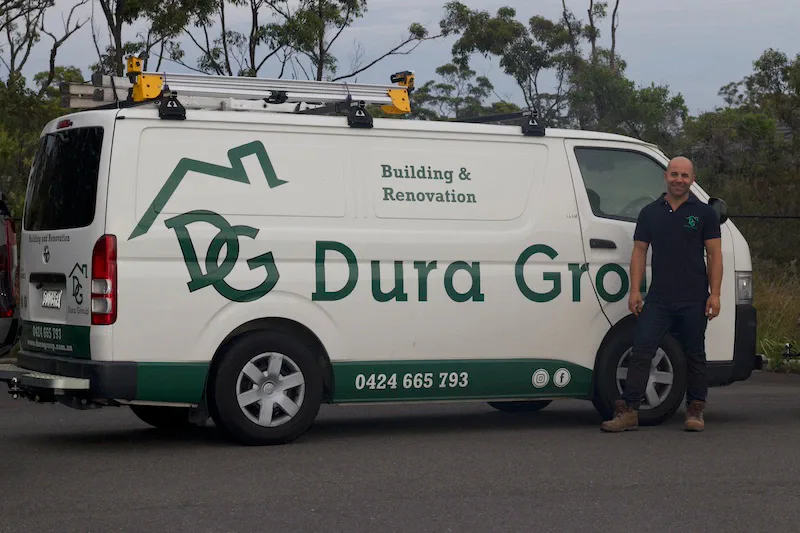
At Dura Group Building & Renovations, Mark and the team do both knockdown rebuilds and full renovations. That means we have no reason to push you in either direction. What we do have is 25 years of experience reading these homes, assessing their bones, and giving homeowners a straight answer before a dollar is committed.
What does a knockdown rebuild actually involve?
A knockdown rebuild means demolishing the existing home and constructing a completely new dwelling on the same land. The block stays yours. The address stays the same. But everything above the ground, and often much of the ground itself, is replaced. You get a modern floor plan, full compliance with current building codes, no hidden structural surprises, and a home built to last another 50 years.
The process involves demolition (including asbestos removal if required), site preparation, council approvals, then a standard new home build. If you want to understand what this costs across Sydney, our knockdown rebuild cost guide for Sydney breaks down the key variables, from demolition and disposal to construction and finishes.
What counts as a deep renovation?
A deep renovation goes well beyond cosmetic updates – it typically involves structural changes, roof work, full rewiring and replumbing, new kitchen and bathrooms, and often reconfiguring internal walls to improve the layout. In scope, it overlaps significantly with building new. The difference is that you are working within, or around, an existing frame, and that frame comes with its own constraints.
Deep renovations in areas like Peakhurst, Mortdale, and Riverwood often involve older brick or fibro construction that has been modified over decades. That means unknown alterations, ageing subfloor structures, and sometimes asbestos-containing materials throughout. For a detailed breakdown of renovation costs across these kinds of projects, see our guide on how much a home renovation costs in Sydney.
When does a knockdown rebuild make more sense?
When the cost of renovation reaches 60 to 70 percent of what it would cost to knock down and rebuild, the rebuild almost always becomes the better financial and practical decision. This threshold accounts for the risk premium built into renovating – the unknowns that only appear once walls come down.
Signs the rebuild path may suit your situation better:
- The existing layout cannot achieve what you need, regardless of budget
- Asbestos is found throughout the structure, not just in isolated sheets
- The subfloor, stumps, or foundations need replacement
- The roof structure is compromised or undersized for what you want to add
- The block can accommodate a larger footprint that the current home underuses
- You want a full 50-year structural warranty and modern energy compliance from day one
For homeowners in the Sutherland Shire, this conversation often centres on fibro cottages on large corner blocks or north-facing lots in suburbs like Engadine, Jannali, and Heathcote. The land is worth preserving. The structure, in many cases, is not. Our fibro home renovation guide covers what to look for when assessing these properties before committing to either path.
When does renovating the existing home make more sense?
Renovation wins when the existing structure is sound, the layout can be unlocked with targeted changes, and the scope stays well below the rebuild cost threshold. It also makes sense when heritage constraints limit what can be built new, or when emotional ties to the existing home are part of the decision.
Solid brick homes from the 1950s and 1960s, common across Georges River suburbs including Peakhurst, Mortdale, and Riverwood, often have genuinely good bones. Thick brick walls, decent rooflines, and generous room proportions mean that with the right renovation scope – new kitchen, bathrooms, updated services, a rear extension, and internal reconfiguration – you can end up with a home that performs and presents exceptionally well, without starting from scratch.
For homeowners specifically looking at what renovation involves in the Shire, our Sutherland Shire renovation guide outlines local council requirements and what the process looks like from assessment through to completion.
How does asbestos affect the decision?
Asbestos is one of the most significant variables in this decision, and it affects both cost and practicality for both paths. In Sydney homes built before 1987, asbestos-containing materials are common. In fibro homes across the Shire and Georges River, they can be found in wall sheeting, ceilings, eaves, flooring, and around wet areas.
For renovation, localised asbestos removal is manageable and well within normal project scope. However, if asbestos is found throughout the structure, including inside wall cavities, under floor coverings, and in the ceiling space, the removal cost during renovation can escalate to a point where it rivals the cost of full demolition and rebuild. Our asbestos and renovation guide covers what licensed removal involves and how it factors into project budgets.
We always recommend a full asbestos assessment before committing to either path. It removes one of the biggest unknowns from the cost conversation.
What about council approvals – do they differ between renovating and rebuilding?
Yes, and the approval pathway can influence your decision, particularly in areas with heritage overlays or specific council development controls. Georges River Council and Sutherland Shire Council each have their own local planning frameworks, and what is permissible under a complying development certificate (CDC) versus what requires a full development application (DA) can differ significantly depending on location, lot size, and proximity to heritage items.
A knockdown rebuild typically requires a DA in most residential zones, which means a longer assessment timeframe and neighbour notification. A large-scale renovation may also require DA approval if it involves structural changes, additions over a certain size, or sits in a heritage conservation area. Our overview of Sydney CDC approval service explains the difference and helps you understand which pathway applies to your project.
Dura Group handles both DA and CDC approvals as part of the build or renovation service. You do not need to deal with council on your own.
Does the block potential change the calculation?
A block’s size, orientation, shape, and zoning significantly influence whether it is worth retaining an underperforming home or rebuilding to maximise what the land offers. Across the Sutherland Shire and Georges River, many older home sites were established in an era when smaller, single-storey dwellings were the norm. Today, those same blocks can comfortably carry a dual-level home with far greater internal space, natural light, and connection to outdoor areas.
If your existing home is sitting on a north-facing block in Sylvania, a corner lot in Mortdale, or a rear-lane accessible site in Peakhurst, a new build can often deliver outcomes the original structure could never achieve regardless of renovation scope. Our Georges River area building guide outlines what building new in that region looks like from a planning and construction perspective.
What role does emotional attachment play?
Emotional attachment to an existing home is a completely legitimate factor, and we take it seriously in every conversation we have with homeowners. The home may be where children grew up, where a family member lived. That is real, and it matters.
What we try to do is separate the emotional value of the home from the structural and financial reality. Sometimes, a well-executed renovation can preserve the soul of a home while transforming how it lives. Other times, a new build on the same land can honour the location, the garden, the street, and the neighbours, while delivering something far better suited to the next chapter of life. There is no universal right answer. The honest answer depends on the specific home, block, and family.
How do building costs compare between the two paths?
In broad terms across Sydney, a knockdown rebuild tends to have more predictable total costs, while a deep renovation carries more cost uncertainty once work begins. Both involve significant investment, and both can deliver outstanding results when approached with clear scope and experienced tradespeople.
The critical difference is contingency. Renovations in older homes routinely uncover surprises – rotted structural members, substandard previous work, asbestos, or services that need full replacement. A new build is costed on a clean slate. For a full picture of what construction costs across Sydney involve, our Sydney building costs guide provides a clear breakdown of the main cost drivers. You can also compare renovation project costs directly at our renovate or rebuild cost comparison.
What is Dura Group’s approach to helping homeowners decide?
Mark meets with homeowners on site, walks through the existing property, and gives an honest assessment before any commitment is made. We have completed renovations and new builds across the Sutherland Shire and Georges River, including projects in Peakhurst, Mortdale, Sylvania, and Engadine. That on-the-ground experience means we know how these homes are built, what their common failure points are, and what is genuinely achievable within each path.
We are a family-owned business. You are not passed to a sales team. Mark personally oversees every project, from first conversation through to handover. That means the same person who helps you make this decision is the same person responsible for delivering it.
Our team works across the Georges River and Sutherland Shire regions, with local builders in Peakhurst, Mortdale, Sylvania, and Engadine – so we understand the local council requirements, the common house types, and the specific considerations that apply in each suburb.
For more about how we can help, visit our home renovation by Dura Group page.
Ready to work out which path is right for your home?
Get in touch with Dura Group Building & Renovations for an assessment. From the Sutherland Shire to the Georges River area, Mark will walk through the property with you, give you a clear picture of both options, and help you make the call with confidence. Contact Dura Group today to get started.

Mark Dura is the founder of Dura Group Building & Renovations, a licensed builder (Lic 381531C) with 27+ years of experience in residential renovations, home extensions, and knockdown rebuilds across Sydney. Mark oversees every project from design through to completion.