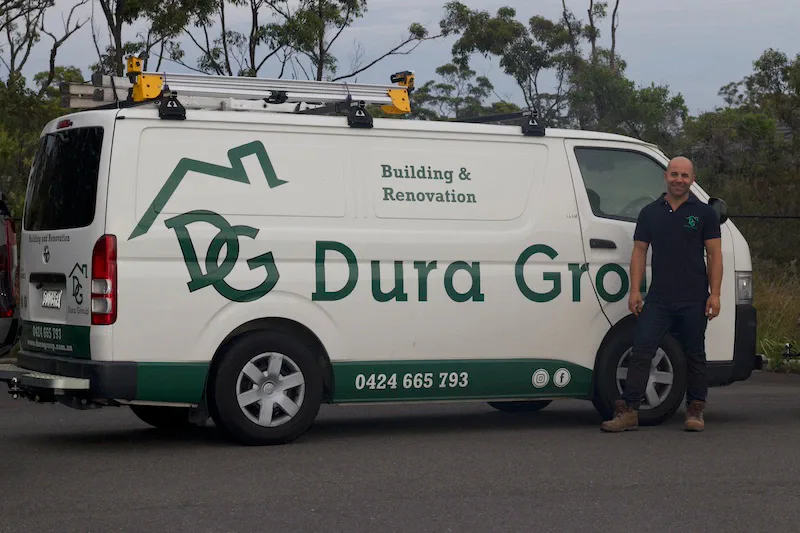
Renovating a 1950s or 1960s home in Sydney is one of the most common projects we take on at Dura Group Building & Renovations, and for good reason. These post-war homes make up a large share of the housing stock across the Sutherland Shire and Georges River area, from Jannali and Gymea through to Carlton, Riverwood, and Peakhurst. They were built quickly to house a growing population, and many of them are still standing on generous suburban blocks. But age brings challenges, and knowing what you’re dealing with before you start can save a lot of time and money.
What types of homes were built in the 1950s and 1960s in Sydney?
Most homes built during this era fall into two categories: fibro (fibrous cement sheet) cottages and early brick veneer houses. Fibro was the dominant material in the early part of the period, especially across suburbs like Jannali, Loftus, Gymea, and Engadine in the Sutherland Shire, and Carlton, Mortdale, and Banksia in the Georges River area. Brick veneer became more common through the late 1950s and into the 1960s as it became more affordable at scale.
Both construction types have their strengths. Brick veneer holds up well structurally when the framing is in good shape. Fibro homes, if maintained properly, can be renovated to a very high standard. The key is understanding what’s behind the walls before you commit to a scope of work.
If you’re working with a fibro home, our fibro home renovation guide covers what to expect in detail.
What are the most common problems in 1950s and 1960s Sydney homes?
The four issues we find most consistently in post-war homes are asbestos-containing materials, undersized timber framing, outdated electrical and plumbing systems, and very poor insulation. Any one of these can affect your renovation scope and budget. In older homes across suburbs like Kirrawee, Peakhurst, and Mortdale, we often find all four in the same building.
Is there asbestos in my 1950s or 1960s home?
If your home was built before 1990 and has fibro sheeting, there is a very high chance it contains asbestos. Asbestos was used extensively in external cladding, internal lining, eaves, and around wet areas like bathrooms and laundries. It cannot be identified by looking at it. Before any demolition or wall removal work begins, a licensed asbestos assessor must inspect and test the materials on site.
Asbestos that is in good condition and left undisturbed is generally not a hazard. The risk comes from cutting, drilling, or removing it without proper containment. At Dura Group Building & Renovations, we coordinate licensed asbestos removal as part of the renovation process so that this is handled correctly before any structural work begins.
For a full breakdown of what’s involved, read our guide on managing asbestos in Sydney renovations.
What about the timber framing and structure?
Post-war homes were often built to the minimum structural requirements of the time, which means the framing is frequently undersized by today’s standards. Timber sizes were smaller, wall studs were spaced wider apart, and ceiling heights were lower, typically around 2.4 metres or less. When you open up walls for a renovation, it’s common to find framing that needs to be upgraded or sister-joisted before new work can proceed.
This is not unusual and it does not make the home unliveable. It does mean your renovation scope needs to account for structural remediation, not just cosmetic upgrades. We always do a proper structural assessment before pricing any renovation so there are no surprises partway through.
Are the electrical and plumbing systems a problem?
Homes from this era typically have electrical systems that predate modern safety standards, including older wiring types that are no longer compliant, and plumbing that uses galvanised steel or early PVC that may be corroding or leaking. In many cases, a full renovation requires a full electrical and plumbing upgrade as part of the scope, not an optional add-on.
The good news is that once the walls are open, this work is far less disruptive and costly than doing it as a standalone job later. We coordinate licensed electricians and plumbers as part of our trusted trades network, and all work is done to current Australian standards.
What about insulation and energy efficiency?
Post-war homes were built with almost no insulation, and the wall and ceiling cavities are often completely empty. This means the homes are cold in winter, hot in summer, and expensive to run. A renovation is the right time to address this, as insulation can be installed in wall cavities and ceilings before lining goes back in. This makes a real difference to comfort and running costs, and it’s a relatively low-cost addition when you’re already mid-renovation.
What does a typical renovation scope look like for a 1950s home?
A full renovation of a 1950s or 1960s Sydney home typically covers asbestos removal, structural framing upgrades, electrical and plumbing replacement, insulation, new internal linings, kitchen and bathroom rebuilds, and exterior cladding work. The exact scope depends on the condition of the home and how much of the existing structure can be retained.
Some homeowners choose a staged approach, starting with the wet areas and essential structural work, then completing the rest over time. Others choose to do a full renovation in one project to avoid the disruption of multiple build phases. Both approaches are valid, and we can help you plan either way.
Understanding the difference between what’s structural and what’s cosmetic is important before you start. Our article on structural vs cosmetic renovation explains the difference and how it affects your planning and budget.
How much does it cost to renovate a 1950s or 1960s home in Sydney?
The cost depends heavily on the condition of the home, the extent of the scope, and whether significant remediation work such as asbestos removal or framing upgrades is required. A light cosmetic renovation on a well-maintained home costs less than a full structural renovation on a home that hasn’t been touched since it was built.
For a clear picture of what drives renovation costs in Sydney, see our home renovation cost guide and our detailed breakdown of building costs across Sydney. Both will help you go into the planning process with realistic expectations.
At Dura Group Building & Renovations, we provide fixed lump sum pricing with no hidden costs. You know the full price before any work starts, and that price doesn’t change unless you change the scope.
Is it worth renovating a 1950s home, or should you rebuild?
In most cases, a well-located 1950s or 1960s home on a good block is worth renovating rather than demolishing, provided the structural bones are sound and the scope of work is realistic for the block size and council requirements. That said, there are situations where rebuilding makes more sense.
If the home has extensive asbestos throughout, significant structural failure, or sits on a large block in a location where a new build would deliver far more usable space, a knockdown rebuild may be the better long-term decision. It is not automatically the more expensive path either, depending on what the renovation scope actually involves.
We’ve written a full guide comparing both options: knockdown rebuild vs renovate. And if you’re still weighing up the financial side, our article on whether it’s cheaper to renovate or rebuild covers the numbers in detail.
What are the council and approval requirements for renovating older homes?
Most structural renovations on 1950s and 1960s homes in the Sutherland Shire and Georges River council areas will require either a Development Application (DA) or a Complying Development Certificate (CDC), depending on the scope and the zone.
Sutherland Shire Council and Georges River Council each have their own rules around setbacks, site coverage, heritage overlays, and flood affectation. Some suburbs along the Georges River have additional constraints due to their proximity to the waterway. We handle DA and CDC applications on behalf of our clients and have experience handling both council processes.
If your project is in the Sutherland Shire, our guide to renovating in Sutherland Shire covers council requirements specific to that area. For Georges River projects, see our guide to building in the Georges River area.
Which suburbs in the Sutherland Shire and Georges River have the most 1950s and 1960s homes?
Post-war homes are the dominant housing type across a wide band of suburbs in both council areas. In the Sutherland Shire, Jannali, Gymea, Loftus, Kirrawee, and Engadine all have high concentrations of fibro and early brick veneer homes built during the post-war housing boom. Many of these streets were subdivided and built out in just a few years as Sydney’s population expanded rapidly southward.
In the Georges River area, Carlton, Mortdale, Riverwood, Peakhurst, and Banksia all share the same character. These were established suburbs by the 1960s, and a significant proportion of the housing stock has seen little structural change since it was first built.
We’ve completed renovations across all of these suburbs and we understand the local housing stock well. If you’re looking for builders in Jannali or builders in Gymea, we work regularly throughout both areas. We also handle projects in Carlton and Riverwood, and our teams are familiar with the types of homes and the council requirements that apply in each location. For projects in those Georges River suburbs, our pages on building in Carlton and building in Riverwood have more information. We also work throughout Loftus, and you can see more about our work as builders in Loftus.
What should you do before starting a renovation on a 1950s or 1960s home?
The most important step before committing to any scope of work is a proper inspection of the home by an experienced builder who understands post-war construction. A visual inspection is not enough. You need someone who knows where to look for structural issues, how to identify asbestos risk areas, and how to assess whether the electrical and plumbing systems are serviceable.
At Dura Group Building & Renovations, Mark personally visits every site before any quote is prepared. With 25 years of experience across Sydney’s older housing stock, he can give you an honest assessment of what the home needs, what can be salvaged, and what will need to be replaced. There are no surprises after the contract is signed.
If you’re planning a major renovation on an older home in the Sutherland Shire or Georges River area and you want to understand the full picture before you commit, get in touch with us for a site visit.
For more about how we can help, visit our home renovations page.
Ready to start your 1950s home renovation?
From Jannali and Gymea to Carlton and across the Sutherland Shire and Georges River, Dura Group Building & Renovations is ready to help you bring your post-war home up to the standard it deserves. Mark oversees every project personally, from the first site visit through to handover. Contact Dura Group today for a consultation and let’s map out what your renovation actually involves.

Mark Dura is the founder of Dura Group Building & Renovations, a licensed builder (Lic 381531C) with 27+ years of experience in residential renovations, home extensions, and knockdown rebuilds across Sydney. Mark oversees every project from design through to completion.