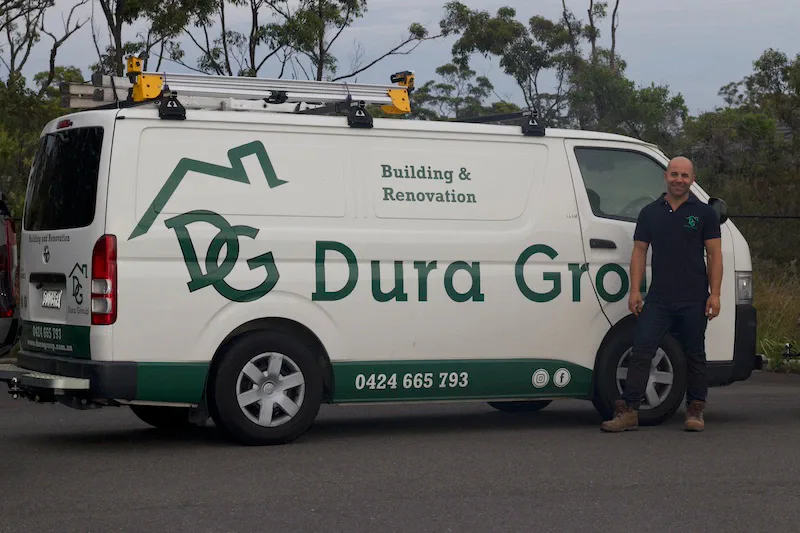
Planning a home renovation or new build in the Sutherland Shire means handling council approvals before any work can begin. Sutherland Shire Council has specific requirements depending on the type of project, the location of your property, and environmental factors like bushfire risk and flood zones. Dura Group Building & Renovations helps homeowners across the Shire understand which approval pathway applies to their project and manages the process from start to finish.
What approvals does Sutherland Shire Council require for residential building work?
Sutherland Shire Council requires either a Development Application (DA), a Complying Development Certificate (CDC), or no approval at all, depending on the scope and nature of the work. Most residential projects fall into one of these three categories. The pathway that applies to your build depends on factors including your lot size, zoning, heritage status, and proximity to bushfire-prone land or flood-affected areas near the Hacking River and Royal National Park.
Understanding the difference between these pathways early saves time and money. If you are unsure about the distinction, our guide on Sydney DA approval service explains the key differences between each option.
When is a Development Application required in the Sutherland Shire?
A DA is required when your project does not meet the criteria for complying development, typically because of site constraints, heritage overlays, or the complexity of the build. Common situations that trigger the DA pathway in the Shire include:
- Properties within heritage conservation areas, such as parts of Cronulla and Gymea
- Dual occupancy developments or subdivisions
- Sites with significant slope or irregular lot shapes that fall outside the Codes SEPP standards
- Land affected by flood planning controls along the Hacking River or Georges River
- Properties on bushfire-prone land near Royal National Park that require a Bushfire Attack Level (BAL) assessment above BAL-29
A DA is lodged directly with Sutherland Shire Council and assessed by their planning team. The process typically takes 40 to 90 days, though complex applications or those requiring neighbour notification can take longer. Council may request additional information, amended plans, or specialist reports during the assessment.
For a broader overview of how this process works across the region, see our explanation of the council approval process in Sydney.
What qualifies for a CDC in the Sutherland Shire?
A CDC is available for standard residential work on compliant blocks that meet all predetermined development standards under the State Environmental Planning Policy (Exempt and Complying Development Codes). This is the faster pathway, and it suits many home builds and renovations across suburbs like Engadine, Menai, Caringbah, and Sylvania.
To qualify for a CDC in the Sutherland Shire, your project generally needs to meet these conditions:
- The lot is zoned residential and meets minimum size requirements
- The property is not listed as a heritage item or within a heritage conservation area
- The land is not mapped as flood-prone (or only minor flood affectation applies)
- The BAL rating for bushfire is BAL-29 or below
- The proposed build complies with height, setback, and floor space ratio controls
A CDC is assessed and issued by a private certifier (also called a registered certifier) rather than council. This is one reason the timeframe is shorter, typically 10 to 20 business days from lodgement with all required documentation.
Dura Group prepares CDC applications for homeowners across the Shire, coordinating with certifiers, surveyors, and engineers to keep the process moving. Our Engadine home builders and Menai home builders teams regularly work with properties that suit the CDC pathway due to the standard residential lots in these suburbs.
What counts as exempt development in the Sutherland Shire?
Exempt development covers minor works that do not need any formal approval from council or a certifier, provided they meet all the conditions set out in the Codes SEPP. Examples of exempt development include:
- Garden sheds and small outbuildings under a specified size
- Minor internal renovations that do not affect the building structure
- Fences under certain heights
- Decks and patios with limited height above ground level
- Replacement of like-for-like materials on a dwelling
The conditions for exempt development are strict. If even one criterion is not met, the work may require a CDC or DA instead. For a detailed breakdown, read our guide on exempt development in NSW.
What are the BASIX requirements for building in the Sutherland Shire?
Every new dwelling, addition, or alteration over a certain cost threshold in NSW must include a BASIX certificate demonstrating compliance with energy and water efficiency targets. BASIX (Building Sustainability Index) is a state government requirement that applies equally across Sutherland Shire Council’s local government area.
A BASIX certificate assesses your project against benchmarks for:
- Water consumption reduction through rainwater tanks, efficient fixtures, and landscaping choices
- Energy efficiency through insulation, glazing, orientation, and heating/cooling systems
- Thermal comfort ensuring the home maintains liveable temperatures without excessive reliance on mechanical systems
The BASIX certificate must be submitted as part of both DA and CDC applications. Dura Group includes BASIX planning in the early design phase so that efficiency measures are integrated into the build rather than added as afterthoughts. For more detail on this requirement, see our article explaining BASIX certificates and how they affect your project.
What Shire-specific considerations affect approvals?
The Sutherland Shire has several local environmental and planning factors that directly influence which approval pathway is available and what additional reports may be needed.
How does bushfire-prone land affect approvals near Royal National Park?
Properties close to Royal National Park, Heathcote National Park, or large areas of bushland require a Bushfire Attack Level assessment that can determine whether a CDC is available or whether a DA is necessary. Many homes in suburbs like Engadine, Heathcote, Waterfall, and parts of Menai sit within designated bushfire-prone land.
A BAL assessment rates your property from BAL-LOW (minimal risk) through to BAL-FZ (flame zone). Properties rated BAL-12.5 to BAL-29 can typically still use the CDC pathway but must incorporate bushfire construction standards under AS 3959. Properties rated above BAL-29 generally need a DA and may require additional bush fire protection measures such as asset protection zones, ember guards, and non-combustible materials.
How do flood zones and the Hacking River affect building approvals?
Flood-affected properties along the Hacking River, Woronora River, and parts of the Georges River are subject to additional planning controls that often require a DA. Sutherland Shire Council maintains flood mapping that identifies properties within flood planning areas. If your property falls within these zones, minimum floor levels may be imposed, and certain types of development may be restricted.
What about heritage conservation areas in Cronulla and Gymea?
Heritage conservation areas in parts of Cronulla and Gymea mean that most external works require a DA, and proposed designs must be sympathetic to the existing streetscape character. Even relatively minor changes to facades, rooflines, or front fencing may need council assessment in these areas. Our builders in Cronulla are familiar with working within heritage guidelines while still delivering the renovation outcomes homeowners want.
How long do council approvals take in the Sutherland Shire?
CDC approvals typically take 10 to 20 business days, while DA approvals take 40 to 90 days depending on the complexity of the application and whether council requests additional information.
These timeframes assume that all documentation is complete at lodgement. Incomplete applications are the most common cause of delays. The documents typically required include:
- Architectural plans and specifications
- Survey plan
- BASIX certificate
- Structural engineering details
- BAL assessment (if applicable)
- Flood report (if applicable)
- Heritage impact statement (if applicable)
- Stormwater management plan
For DA applications, council may also require neighbour notification, which adds time to the assessment. If submissions are received from neighbours, council must consider these before determining the application.
How does Dura Group manage the approval process?
Dura Group manages approvals end to end, from determining the correct pathway through to obtaining the certificate so construction can begin. This includes coordinating with architects, engineers, surveyors, bushfire consultants, and certifiers on your behalf.
The process we follow for Shire projects includes:
- Site assessment to identify constraints including zoning, overlays, and environmental factors
- Pathway determination, confirming whether your project suits a CDC, requires a DA, or qualifies as exempt
- Design development with approval requirements built in from the start
- Documentation preparation, coordinating all required reports and certificates
- Lodgement and liaison with council or the certifier through to determination
This approach reduces the risk of delays and rework. Our DA approval services in Sydney and CDC approval service cover the full process for Shire homeowners. Renovating in the Sutherland Shire or building new? Having the approval process handled by your builder means one point of contact rather than managing multiple consultants yourself.
Our teams work across the local government area, including builders in Caringbah, Sylvania builders, and builders in Jannali. Each suburb has its own mix of site conditions, and local experience matters when preparing applications that meet council expectations the first time.
Ready to start your Sutherland Shire project?
Getting the right advice early makes the approval process straightforward rather than stressful. If you are planning a renovation, extension, or new build in the Sutherland Shire, Dura Group can assess your site, confirm the approval pathway, and manage the entire process on your behalf.
Get in touch with Dura Group to discuss your project and find out which approval pathway applies to your property.

Mark Dura is the founder of Dura Group Building & Renovations, a licensed builder (Lic 381531C) with 27+ years of experience in residential renovations, home extensions, and knockdown rebuilds across Sydney. Mark oversees every project from design through to completion.