Every renovation budget starts with good intentions. You research materials, get quotes, and set aside a contingency. But for most homeowners across Sydney, the real budget pressure comes from costs they never saw coming. These hidden expenses can add $20,000 to $80,000 or more to a project, turning a manageable renovation into a financial headache.
Understanding home renovation costs upfront is the single best way to avoid nasty surprises. But even well-researched homeowners regularly underestimate what lurks behind walls, under floors, and inside council fee schedules.
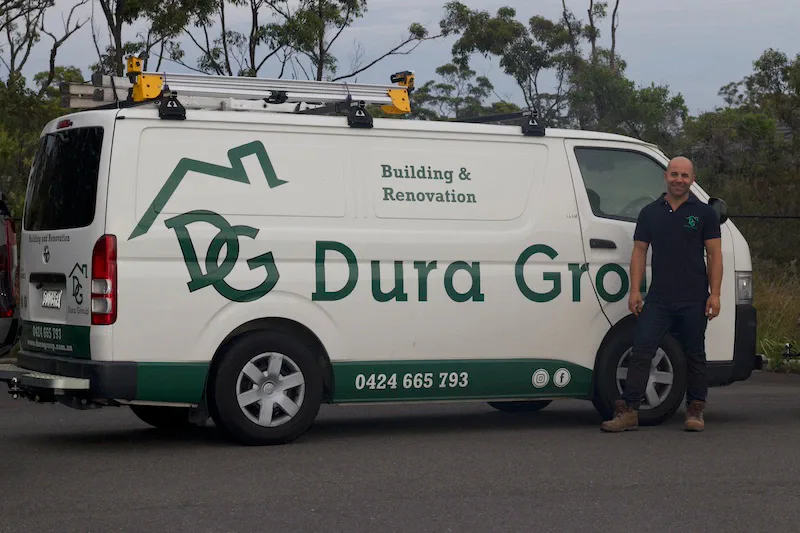
At Dura Group Building & Renovations, we see these overlooked costs on almost every project. Here is what you need to know before you commit to a renovation budget.
What does asbestos removal cost during a renovation?
Asbestos removal typically costs between $5,000 and $30,000 depending on the extent of contaminated materials in your home. Any Sydney home built before 1990 has a high probability of containing asbestos in eaves, wet area linings, floor tiles, fencing, or roof sheeting. You cannot legally disturb these materials without a licensed removalist and proper disposal.
Homes in the Sutherland Shire and Georges River areas are particularly affected because much of the housing stock dates from the 1950s through 1980s, peak decades for asbestos use in Australian construction. A simple bathroom strip-out can become a $15,000 exercise if asbestos is found in wall linings and flooring.
Getting an asbestos inspection before your renovation begins is non-negotiable. The cost of testing ($300 to $800) is minimal compared to the budget shock of discovering contamination mid-project.
What structural surprises should you budget for?
Structural issues like termite damage, undersized framing, and foundation problems are the most expensive hidden costs, often adding $10,000 to $50,000 to a renovation. These problems only become visible once walls are opened up or floors are lifted.
Common structural surprises include:
- Termite damage: Active or historic termite activity that has compromised load-bearing timber. Repair costs depend on how many members need replacement.
- Undersized framing: Older homes were often built to standards that would not pass current engineering requirements. If you are altering the structure, the entire load path may need upgrading.
- Foundation settlement: Cracking, movement, or inadequate footings that require underpinning or new concrete work before any renovation can proceed.
- Non-compliant previous work: Unapproved additions or modifications by past owners that must be rectified before council will approve new work.
Inner West suburbs like Marrickville have many homes over 100 years old where original subfloor timbers have deteriorated. Our Marrickville builders regularly encounter these conditions in federation and Victorian-era terraces.
How much do council and approval fees add to a renovation?
Council fees, certifier costs, and compliance reports typically add $5,000 to $20,000 to a renovation budget. Most homeowners budget for the build itself but forget the administrative costs required before a single hammer swings.
These fees include:
- DA lodgement fees: Calculated as a percentage of project cost, typically $2,000 to $8,000 for residential work.
- Private certifier fees: For CDC applications and construction certificates, expect $3,000 to $6,000.
- BASIX certificate: Required for all residential work, costing $200 to $600 depending on project scope.
- Engineering reports: Structural engineering for new beams, footings, or retaining walls runs $2,000 to $5,000.
- Survey and site classification: Boundary surveys, contour surveys, and geotechnical reports cost $1,500 to $4,000 combined.
Understanding the difference between DA approvals with Dura Group can save both time and money. CDC approvals are faster but not suitable for every project, while DAs give more flexibility but involve longer timeframes and higher fees.
Before signing any building contract, make sure you understand exactly which approvals are included in your quote. Knowing how to read a building contract will help you identify whether these costs sit with you or your builder.
How much does temporary accommodation cost during a renovation?
Temporary living costs during a major renovation range from $500 to $1,500 per week, adding $5,000 to $30,000 over the course of a project. This is one of the most commonly forgotten line items in a renovation budget.
A full home renovation or major structural work typically requires you to vacate for 12 to 20 weeks. Even a large kitchen renovation can make a home unliveable for 6 to 10 weeks if you lose access to cooking facilities and water.
When calculating your renovation budget breakdown, include:
- Short-term rental accommodation or Airbnb costs
- Storage fees for furniture and belongings ($200 to $500 per month)
- Additional commuting costs if your temporary location is further from work or school
- Pet boarding if your rental does not allow animals
- Mail redirection and utility holding fees
Families in the Sutherland Shire often underestimate this cost because short-term rentals in the area are limited and premium-priced during summer months.
What utility upgrades might your renovation require?
Utility upgrades including switchboard replacements, water main upsizing, and sewer connections can cost $3,000 to $15,000. Older homes often have electrical and plumbing infrastructure that cannot support modern renovation demands.
Common utility upgrades include:
- Switchboard upgrade: Homes with old ceramic fuses or insufficient circuit capacity need a full switchboard replacement ($2,000 to $5,000) before any new electrical work can be connected.
- Water main replacement: Galvanised or lead water mains in pre-1970s homes often need replacement with copper or poly pipe ($2,500 to $6,000).
- Sewer and stormwater relocation: If your renovation footprint crosses existing sewer lines, Sydney Water requires relocation or build-over approval ($3,000 to $10,000).
- Gas line extension or disconnection: Adding or moving gas appliances requires licensed gas fitting work and compliance certification.
These upgrades are not optional. They are triggered by Building Code of Australia requirements the moment you lodge for approval. A kitchen renovation services that requires a switchboard upgrade and gas line extension can easily add $7,000 to $10,000 beyond the kitchen fitout itself.
How much should you budget for landscaping reinstatement?
Landscaping and external reinstatement after construction typically costs $5,000 to $25,000, depending on access damage and the scope of outdoor work required. Construction vehicles, scaffolding, and material storage inevitably damage lawns, gardens, driveways, and fencing.
Items to budget for include:
- Driveway and path repair or replacement where heavy vehicles have caused cracking
- Fence replacement on boundaries affected by excavation or scaffolding
- Returfing and garden bed reinstatement
- Retaining wall repairs if excavation has undermined existing structures
- Council nature strip restoration (required as a condition of occupation certificate)
Properties in the Georges River area with sloping blocks face higher reinstatement costs because excavation and retaining work is more extensive. Our builders in Peakhurst frequently work on sloping sites where careful planning minimises external damage.
What do waste removal and skip bins cost on a renovation?
Waste removal costs between $3,000 and $12,000 on a typical renovation, with skip bin hire, tipping fees, and asbestos disposal making up the bulk. Most homeowners assume one or two skip bins will cover demolition waste. The reality is usually three to five bins for a full renovation.
Key waste cost drivers:
- Mixed waste skip bins: $800 to $1,200 per 6-cubic-metre bin
- Asbestos disposal: Requires separate sealed bins and licensed transport, costing two to three times standard waste rates
- Concrete and masonry: Heavy materials attract surcharges at tip facilities
- Council clean-up bonds: Some councils require a damage deposit ($2,000 to $5,000) refundable after site restoration
A Dura Group bathroom renovations might seem small, but demolishing tiles, waterproofing membranes, and old plumbing generates more waste than most people expect. Factor in at least one full skip bin for a single bathroom strip-out.
How does fixed lump sum pricing protect you from hidden costs?
Fixed lump sum contracts transfer the risk of cost overruns from the homeowner to the builder, giving you a guaranteed maximum price before work begins. This is the single most effective way to protect yourself from budget blowouts.
Dura Group uses fixed lump sum pricing on every residential project. This means we conduct thorough pre-construction investigations, including asbestos testing, structural assessments, and service locating, before we quote. The price we agree on is the price you pay.
Understanding building costs in Sydney helps you evaluate whether a fixed price quote is realistic. If a quote seems too low, the builder may be planning to recover margin through variations. If it seems high, they may be padding for risk they have not properly investigated.
Our approach across the Sutherland Shire, Georges River, and Inner West is to spend more time in pre-construction so there are fewer surprises during the build. Our our home renovation service are built around this principle. This protects both your budget and your timeline.
Engadine home builders from our team work with local knowledge of soil conditions, common construction methods, and council requirements specific to the Shire. This local expertise directly reduces the chance of unexpected costs appearing mid-project.
How can you protect your renovation budget from the start?
The best protection is thorough pre-construction investigation combined with a fixed lump sum contract from a builder who takes responsibility for what they find.
Steps you can take before committing to a renovation:
- Get an asbestos audit before obtaining renovation quotes
- Commission a building inspection that includes subfloor and roof space access
- Ask your builder which approval pathway applies and what fees are included
- Request a detailed scope document that lists inclusions and exclusions
- Set aside a genuine contingency of 10 to 15 percent above the fixed contract price for owner-initiated changes
- Discuss temporary accommodation logistics early so you can plan ahead
If you are planning a renovation and want to understand the full picture before committing, Dura Group offers consultations where we walk through likely hidden costs specific to your home’s age, location, and construction type.
Get in touch with our team to discuss your project and get a realistic understanding of total renovation costs before you commit.

Mark Dura is the founder of Dura Group Building & Renovations, a licensed builder (Lic 381531C) with 27+ years of experience in residential renovations, home extensions, and knockdown rebuilds across Sydney. Mark oversees every project from design through to completion.