A typical renovation budget splits across six main categories: design and approvals, demolition and site preparation, structural work, fit-out and finishes, services (plumbing, electrical, HVAC), and contingency. Understanding where every dollar is allocated helps you make informed decisions, avoid surprises, and get better value from your building project. At home renovations, we use fixed lump sum contracts so you know exactly what you are paying before work begins.
How does a typical renovation budget break down?
Most residential renovations follow a consistent percentage split across six cost categories. While the exact figures depend on your scope, site conditions, and material selections, the general framework looks like this:
- Design and approvals: 5 to 10 percent of the total budget
- Demolition and site preparation: 5 to 8 percent
- Structural work: 25 to 35 percent
- Fit-out and finishes: 30 to 40 percent
- Services (plumbing, electrical, HVAC): 15 to 20 percent
- Contingency: 10 to 15 percent
For a whole-home renovation across suburbs like Sylvania, Caringbah, or Bexley, these proportions hold fairly steady. If you want a broader picture of what to expect, our guide on home renovation costs in Sydney covers the full range of project types and price points.
What is included in design and approvals?
This category covers architectural drawings, engineering reports, council DA or CDC lodgement fees, and any specialist consultants such as energy assessors or surveyors. On a straightforward internal renovation where no structural changes occur, this portion sits closer to 5 percent. It pushes toward 10 percent when you need full Development Application documentation, heritage overlays, or when Sutherland Shire Council or Georges River Council requires additional reports.
Dura Group handles the entire approval process for our clients. We coordinate with architects, engineers, and council to keep this phase moving without unnecessary back-and-forth.
What drives demolition and site preparation costs?
Demolition costs are driven by the volume of material being removed, asbestos presence, site access limitations, and waste disposal requirements. Older fibro homes across Jannali, Engadine, and Mortdale often require licensed asbestos removal, which adds to this portion. Tight rear access or sloping blocks (common throughout the Sutherland Shire) may require smaller equipment or manual handling, which increases labour time.
If you are budgeting carefully, our article on hidden renovation costs explains how to identify these items before they appear on your invoice.
Why does structural work take up 25 to 35 percent?
Structural work includes footings, framing, load-bearing wall modifications, roofing, and any steel or concrete elements. This is the backbone of your renovation. It costs more when you are removing walls to open up a floor plan, adding a second storey, or extending the building footprint.
Projects that stay within the existing envelope (such as a kitchen or bathroom refresh) will sit at the lower end. A full rear extension or second-storey addition in suburbs like Hurstville, Penshurst, or Oatley will push structural costs toward that 35 percent mark. Our guide on building costs in Sydney provides context for what structural scope typically looks like across different project sizes.
What is included in fit-out and finishes?
Fit-out covers everything visible once the structure is complete: cabinetry, benchtops, flooring, tiling, painting, doors, hardware, and fixtures. This is the category where your material choices have the biggest effect on total cost. Choosing engineered stone over laminate benchtops, or hardwood flooring over vinyl plank, can shift this portion from 30 percent to 40 percent quickly.
At Dura Group, we encourage clients to purchase their own tiles and prime cost items directly. This removes builder markups and gives you full control over what you spend on finishes.
How do kitchen and bathroom budgets differ from whole-home renovations?
Kitchens and bathrooms concentrate more spending into services and fit-out, while whole-home renovations spread costs more evenly across structural and finishing trades.
A kitchen renovation typically allocates 40 to 50 percent toward cabinetry, benchtops, and appliances. Plumbing and electrical sit higher than average because of the density of connections in a small space. Our breakdown of kitchen renovation costs explains how each element contributes.
Bathrooms have a similar profile. Waterproofing, tiling, and fixtures dominate, with plumbing taking a larger share than in any other room. You can read more in our guide to bathroom renovation costs.
Whole-home renovations spread costs more broadly. Structural work takes a larger slice because you are dealing with multiple rooms, potentially changing the layout, and coordinating across a bigger footprint.
How do PC items and provisional sums work in building contracts?
Prime cost (PC) items are allowances for materials you have not yet selected at contract signing, while provisional sums cover work where the final cost cannot be determined until it is underway. Both are common in building contracts, and both carry risk for homeowners.
A PC item might be a $2,000 allowance for a bathroom vanity. If you choose one that costs $3,200, you pay the difference. A provisional sum might be $8,000 for excavation, which could end up costing $12,000 if rock is encountered. These variations add up and make it difficult to predict your final bill.
If you are unfamiliar with contract terminology, our article on reading a building contract walks through each section so you know what to look for before you sign.
Why does Dura Group use fixed lump sum pricing?
We use fixed lump sum contracts because they give you a guaranteed total price with no hidden costs or budget blowouts. Rather than filling a contract with provisional sums that can escalate, we do the detailed scoping, quoting, and coordination upfront. We confirm materials, trades, and site conditions before issuing a fixed price.
This means your renovation budget is locked in from day one. You know exactly what the structural work, fit-out, and services will cost before we start. Our Sylvania home builders team and crews working with clients from Kogarah to Cronulla all operate under the same transparent pricing model.
How should you prioritise spending when budget is tight?
Prioritise structural integrity and waterproofing first, then services, then finishes. You can always upgrade a benchtop or repaint a room in a few years, but you cannot easily redo framing, plumbing rough-ins, or waterproofing membranes once they are covered.
Here is a practical priority list:
- Structural repairs and compliance items (non-negotiable)
- Waterproofing in wet areas
- Plumbing and electrical upgrades
- Insulation and ventilation
- Cabinetry and fixed joinery
- Flooring and tiling
- Paint, hardware, and accessories
Knowing the cost per square metre for renovations in Sydney helps you understand what scope is realistic for your available funds. Our builders in Bexley and builders in Caringbah regularly work with homeowners to find the right balance between scope and budget.
What role does contingency play in your budget?
Contingency covers unexpected discoveries, design changes you initiate during construction, and minor scope adjustments that arise on any renovation. A 10 to 15 percent contingency is standard practice. On older homes across the Shire and Georges River area, where concealed conditions (termite damage, non-compliant wiring, deteriorated framing) are more common, sitting at the higher end of that range is wise.
With Dura Group’s fixed lump sum approach, your contingency sits outside the contract price. It is your personal safety net for owner-initiated changes, not a buffer for builder miscalculations.
Ready to plan your renovation budget?
If you want a clear, fixed-price quote for your renovation, contact Dura Group for an obligation-free discussion. We will walk you through the full budget breakdown for your specific project so there are no surprises once work begins.

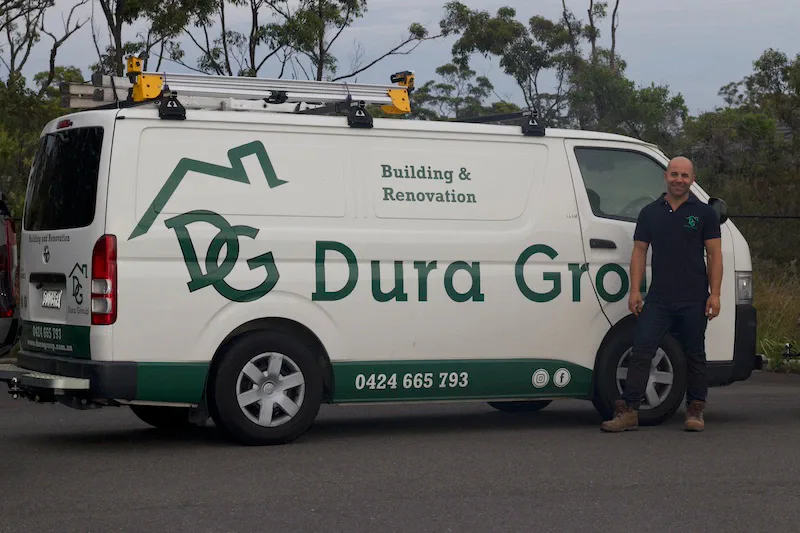
Mark Dura is the founder of Dura Group Building & Renovations, a licensed builder (Lic 381531C) with 27+ years of experience in residential renovations, home extensions, and knockdown rebuilds across Sydney. Mark oversees every project from design through to completion.