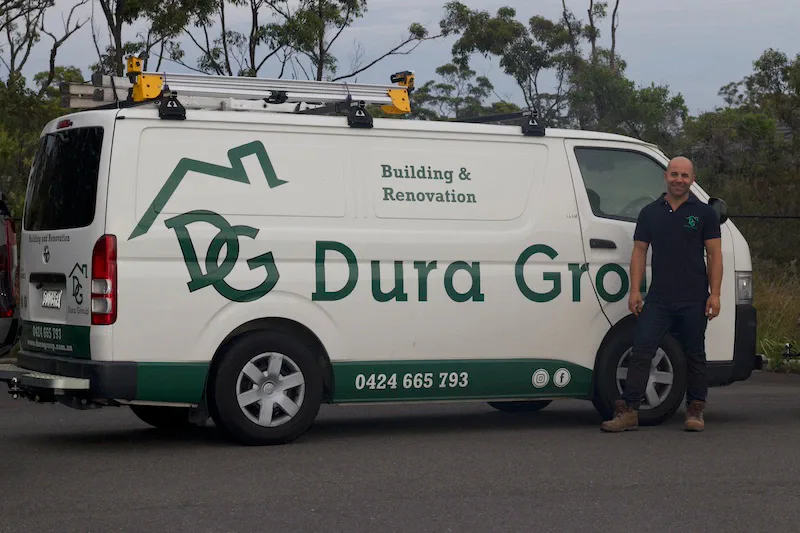
A granny flat is one of the most practical additions a Sydney homeowner can make to their property. Rental income, a private space for ageing parents, or a home for adult children – a well-built granny flat delivers long-term value. At Dura Group Building & Renovations, we have helped families across the Sutherland Shire and Georges River area turn large backyards into fully functional secondary dwellings, and this guide covers everything you need to know before you start.
What is a granny flat in NSW?
A granny flat, formally known as a secondary dwelling, is a self-contained home built on the same lot as a primary residence. In NSW, a granny flat can be up to 60 square metres of internal floor area and must sit on a lot of at least 450 square metres. It needs its own kitchen, bathroom, and living space, and it must be habitable as a standalone home. The rules governing secondary dwellings in NSW are set out in the State Environmental Planning Policy (Housing) 2021, which replaced and consolidated the earlier SEPP (Affordable Rental Housing) 2009.
What are the rules for building a granny flat in the Sutherland Shire?
Most granny flats in the Sutherland Shire can be approved through the Complying Development Certificate (CDC) pathway, which is faster and does not require a full Development Application (DA) with council. To use the CDC pathway, the property must meet specific criteria under the Housing SEPP, including the 450 square metre minimum lot size, a 60 square metre maximum floor area for the secondary dwelling, and setback requirements from boundaries and the primary dwelling.
The CDC pathway is processed by a private certifier rather than Sutherland Shire Council, which typically means approval in a matter of weeks rather than months. If your property does not meet the CDC criteria, a DA through Sutherland Shire Council is still an option, though the process takes longer and involves more steps. Our guide to CDC approval service explains the differences in detail and helps you identify which path suits your situation.
Granny flats are particularly common on the larger residential blocks found across Menai, Alfords Point, Bangor, and Engadine, where lot sizes regularly exceed 600 to 800 square metres and there is ample room for a secondary dwelling with its own outdoor area. If you are planning a build in these suburbs, we can assess your block and confirm which approval path applies.
What are the rules for building a granny flat in the Georges River area?
The same NSW Housing SEPP rules apply across the Georges River Council area, so the 450 square metre lot size minimum and 60 square metre floor area cap remain in place. In practice, suburbs such as Lugarno and Peakhurst have a good mix of block sizes, and many properties comfortably meet the CDC eligibility criteria. Georges River Council manages DA applications for secondary dwellings on properties that do not qualify for the CDC route.
If you are building in the Georges River area and want to understand council-specific requirements in more depth, our page on building in the Georges River area covers local planning considerations for homeowners in that region. For Sutherland Shire homeowners, our guide to renovating in the Sutherland Shire is a useful companion resource.
Do I need council approval for a granny flat in Sydney?
Yes, all granny flats in NSW require some form of formal approval before construction begins, either a CDC from a private certifier or a DA through your local council. Building without approval is illegal and can result in forced removal of the structure, fines, and difficulties when selling the property. The good news is that if your block meets the Housing SEPP criteria, the CDC process is straightforward and considerably faster than the DA route.
At Dura Group Building & Renovations, we handle both the CDC and DA processes on behalf of our clients. Mark personally oversees every project from the planning stage through to completion, so you are not left handling approvals alone. Our page on the council approval process in Sydney provides a broader overview of how the system works across different councils and project types.
How much does a granny flat cost in Sydney?
A single-bedroom granny flat in Sydney typically costs between $120,000 and $180,000, while a two-bedroom granny flat ranges from $150,000 to $250,000. These are project-type ranges based on the scope of the build, not location-based pricing. The actual figure for your project will depend on the site conditions, the design you choose, the level of finishes, and whether any additional services connections are required.
For a broader picture of building costs across different project types in Sydney, our building costs in Sydney 2026 price guide is a helpful reference.
What is included in a granny flat build price?
A complete granny flat build price typically includes the concrete slab, timber or steel frame, external cladding, roofing, internal wall linings, floor coverings, kitchen fitout, bathroom fitout, plumbing, electrical, and basic landscaping around the structure. At Dura Group Building & Renovations, our pricing is lump sum with no hidden costs, so what you are quoted is what you pay for the items within the agreed scope.
What is not included in a granny flat build price?
Site costs and services connections are the two most common cost additions that sit outside the base build price. Site costs relate to the condition of your land, for example, if there is significant cut and fill required, rock below the surface, or an unusual slope. Services connections, such as running a water supply, sewer connection, or electrical supply from the main dwelling to the granny flat, can add to the project cost if the distances involved are substantial. We assess these factors during the quoting stage so there are no surprises once work begins.
What granny flat designs work best for Sydney blocks?
The most practical granny flat designs for Sydney residential lots are detached single-storey structures positioned at the rear of the block, often with a separate entry from a side laneway or rear boundary. A one-bedroom layout works well for a single occupant or couple, while a two-bedroom layout suits adult children returning home or elderly parents who need a dedicated bedroom and a spare room for a carer or visiting family.
Designs with an open-plan kitchen and living area, a full bathroom, and a private outdoor area tend to feel spacious even within the 60 square metre limit. Good orientation, natural light, and cross-ventilation matter, particularly on blocks in Bangor or Engadine where summer heat can be a factor.
If you are still considering whether a granny flat is the right direction or whether a home extension might suit your needs better, our home extension cost guide and ground floor extension guide provide a useful comparison. Both options can add living space and property value, but they serve different purposes and are governed by different planning rules.
Why do Sydney homeowners build granny flats?
The three most common reasons Sydney homeowners build granny flats are rental income, housing for ageing parents, and accommodation for adult children. Rental income is a strong motivator, particularly across the Sutherland Shire where rental vacancy rates are consistently low and demand for private, self-contained accommodation is high. A well-built granny flat can generate meaningful income that offsets mortgage costs over time.
For families with ageing parents, a granny flat provides close proximity without the loss of independence. Parents can live on the same property as their children and grandchildren while maintaining their own private space, kitchen, and entrance. This arrangement is common in Lugarno and Peakhurst in the Georges River area, where established family homes often sit on blocks large enough to accommodate a second dwelling.
Adult children returning from university or saving for their first home are another strong driver. Rather than paying rent elsewhere, they can live in a granny flat on the family property at little or no cost, which is a practical solution given Sydney’s housing market.
How long does it take to build a granny flat in Sydney?
From initial consultation to completion, most granny flat projects take between 16 and 24 weeks, depending on the complexity of the design, the approval pathway, and site conditions. The CDC approval stage alone typically takes 2 to 6 weeks with a private certifier. Construction of a standard granny flat once approval is in place generally takes 10 to 14 weeks.
At Dura Group Building & Renovations, we prepare all materials and confirm trades before work begins. This approach avoids the delays that occur when builders start a job before materials or subcontractors are properly organised. Our page on the home building process walks through each stage in detail so you know what to expect from start to finish.
Which Sydney suburbs are best suited to granny flat builds?
Suburbs across the Sutherland Shire and Georges River area are well suited to granny flat construction because many residential blocks in these areas meet the 450 square metre minimum lot size required under the Housing SEPP. In the Sutherland Shire, Menai, Alfords Point, Bangor, and Engadine stand out for the size and character of their residential lots. In the Georges River area, Lugarno and Peakhurst have a strong base of established homes on generous blocks.
We have completed projects for homeowners in and around these areas and understand the local planning context well. If you are located in suburbs such as Menai, Caringbah, Lugarno, or Sylvania, our local builder pages are a good starting point to understand our work in your area:
Why choose Dura Group Building & Renovations for your granny flat?
Mark has more than 25 years of experience in Sydney residential construction, and every granny flat project at Dura Group Building & Renovations is personally overseen by him from the first site visit to the final inspection. We are a family-owned business, fully licensed and insured, and members of Master Builders. Our pricing is lump sum with no hidden costs, and we handle the approval process so you do not have to manage paperwork or liaise with certifiers on your own.
We work with trusted subcontractors who know our standards and our timeline expectations. Materials and trades are confirmed before construction starts, which keeps your project moving without the gaps and delays that are common when builders are sourcing resources mid-build. Our clients consistently rate us 5 stars on Google, and we are proud of the relationships we build with every family we work with.
If you are comparing costs across different project types, our Sydney building costs guide is a good resource, and the council approval process page explains what you can expect during the planning stage.
For more about how we can help, visit our Sydney home extensions page.
Ready to start your granny flat build?
If you have a block in the Sutherland Shire or Georges River area and you are thinking about building a granny flat, we would be glad to walk you through the options. Contact Dura Group Building & Renovations today for a free consultation and let us help you make the most of your property.

Mark Dura is the founder of Dura Group Building & Renovations, a licensed builder (Lic 381531C) with 27+ years of experience in residential renovations, home extensions, and knockdown rebuilds across Sydney. Mark oversees every project from design through to completion.