Kitchen and bathroom renovations consistently deliver the strongest return on investment for Sydney homeowners, typically returning 50 to 80 percent of spend at resale. But not every renovation adds value equally. The type of project, your property’s location, and how you approach the renovation all shape whether you walk away with a profit or lose money through over-capitalisation.
At residential renovation services, we help homeowners across the Sutherland Shire and Georges River region make smart renovation decisions. Here is a breakdown of which projects add the most value and which ones to approach with caution.
What is renovation ROI and why does it matter?
Renovation ROI measures how much of your renovation spend you recoup when you sell your home. A renovation with 70 percent ROI means a $50,000 project adds roughly $35,000 to your sale price. Understanding this helps you prioritise projects, especially if you plan to sell within 5 to 10 years.
ROI is not the only reason to renovate. Many homeowners renovate for lifestyle, comfort, or growing families. But knowing the numbers lets you make informed choices about where your budget goes. If you are weighing up your options, our guide on home renovation costs in Sydney is a useful starting point.
Which renovations deliver the highest return in Sydney?
Do kitchen renovations add value?
Kitchens deliver a 50 to 80 percent return on investment, making them one of the strongest value-add renovations you can complete. Buyers treat kitchens as a non-negotiable focal point when assessing a property. A dated kitchen can knock tens of thousands off a sale price, while a modern, functional kitchen lifts the entire home’s appeal.
The key to maximising kitchen ROI is spending proportionately to the home’s overall value. A $60,000 kitchen in a $700,000 home risks over-capitalisation. A well-planned $30,000 to $45,000 kitchen renovation in the same home is more likely to pay for itself. Our detailed breakdown of kitchen renovation costs covers what drives the budget up or down.
For homeowners in suburbs like Jannali, Oatley, and Menai, mid-range kitchen renovations tend to perform well at resale because buyers in these areas expect quality finishes without overly bespoke fitouts.
Do bathroom renovations add value?
Bathroom renovations return 60 to 80 percent of spend and are one of the safest investments you can make before selling. A tired bathroom is one of the top reasons buyers negotiate a lower price or skip a property altogether.
Even modest updates like replacing dated tiles, installing a frameless shower screen, and upgrading tapware can shift buyer perception. A full renovation including waterproofing, new fixtures, and modern layout changes delivers even stronger returns. You can read more in our guide to bathroom renovation costs.
Across the Sutherland Shire, many homes built in the 1970s and 1980s still have original bathrooms. Updating these spaces is one of the fastest ways to bring a property in line with current buyer expectations.
Does adding a bedroom or second storey add value?
Adding a bedroom or going up with a second storey can deliver high ROI, particularly on smaller two-bedroom homes where the upgrade shifts the property into a completely different buyer market. Taking a two-bedroom home to three bedrooms opens it up to families, which dramatically increases demand and sale price.
A second storey addition on a single-level home in suburbs like Engadine, Jannali, or Peakhurst can add $200,000 or more to the property’s value when the cost to build is well managed. Our guide to second storey extensions walks through what is involved.
Ground floor extensions also perform well, especially when they create open-plan living that connects to outdoor areas. See our ground floor extension guide for planning details. For a broader look at extension costs, our page on home extension costs is helpful.
Do outdoor living areas and decks add value?
Outdoor living spaces return 50 to 70 percent of investment and strongly influence buyer emotion during inspections. In the Sutherland Shire, where the climate supports year-round outdoor entertaining, a well-designed deck or alfresco area is almost expected by buyers.
The best-performing outdoor projects create a natural flow from indoor living to outdoor entertaining. Covered areas with ceiling fans, built-in seating, or outdoor kitchens add perceived value that often exceeds the build cost. Homes backing onto bushland in suburbs like Engadine and Heathcote benefit particularly well from outdoor spaces that frame the views.
Does street appeal affect property value?
Street appeal improvements are one of the most cost-effective ways to lift a home’s sale price, often returning 100 percent or more of the modest spend involved. First impressions shape the entire inspection experience. A fresh facade, new front fence, landscaped garden beds, and updated front door can add $20,000 to $50,000 in perceived value for a relatively small outlay.
Simple upgrades like repainting weatherboards, replacing a rusty letterbox, and adding path lighting are low-cost changes with outsized impact. For brick homes across the Georges River area, even a rendered and painted facade can modernise a 1980s exterior dramatically.
Which renovations do not add value?
Swimming pools, overly personalised fitouts, and renovations that push a home beyond the suburb’s price ceiling are the most common ways homeowners lose money. These projects feel like improvements but often fail to translate into higher sale prices.
Do swimming pools add value?
Pools rarely add value proportional to their cost, and in some suburbs they actively reduce a home’s appeal. A pool costs $50,000 to $80,000 or more to install, yet buyers often view them as a maintenance burden. Families with young children may see pools as a safety concern rather than a selling point.
In suburbs with smaller block sizes, pools also reduce usable backyard space. If you are renovating purely for resale, a pool is generally not the right investment unless the property is positioned in a market where pools are standard.
Can you over-capitalise on a renovation?
Over-capitalisation happens when you spend more on improvements than the market will return at sale, and it is the single biggest financial risk in renovation. This occurs when renovations push a home’s total value above the price ceiling for the street or suburb.
For example, spending $150,000 on a renovation for a home worth $900,000 in an area where comparable homes sell at $1,050,000 maximum leaves very little margin. Understanding building costs in Sydney and the local market ceiling is essential before committing to a scope of work.
Do personalised fitouts hurt resale?
Highly personalised design choices, such as bold tile colours, themed rooms, or unusual layouts, limit your buyer pool and can reduce perceived value. What feels like a unique expression of style to one homeowner may feel like a $20,000 rectification job to a buyer.
Neutral palettes, timeless materials, and functional layouts appeal to the broadest range of buyers. This does not mean everything must be white and grey, but it does mean choosing finishes with proven resale appeal.
How does location affect renovation ROI?
The same renovation can return vastly different percentages depending on the suburb, the home’s position in the market, and local buyer expectations. A $40,000 kitchen renovation on an entry-level property in a high-demand area will often return more than the same kitchen on a home already near the suburb’s price ceiling.
In established Sutherland Shire suburbs like Oatley, Jannali, and Menai, renovated homes command strong premiums because buyers are willing to pay more for move-in-ready properties. In suburbs with higher turnover and younger demographics, practical renovations that reduce ongoing maintenance also perform well.
Local builders in Menai, builders in Oatley, and builders in Jannali understand what buyers in these areas expect. Working with a builder who knows the local market helps you avoid spending on features that will not move the needle at resale.
Should you renovate for value or for lifestyle?
The answer depends on your timeline. If you plan to sell within 2 to 5 years, renovate with ROI front of mind. If you plan to stay for 10 or more years, renovating for lifestyle makes sense because you will enjoy the improvements daily.
The smartest approach sits in the middle. Choose renovations that improve your daily life while also appealing to future buyers. Open-plan kitchens, modern bathrooms, additional living space, and outdoor entertaining areas tick both boxes.
When renovating for lifestyle on a home you will eventually sell, avoid choices that are difficult to reverse. A bold feature wall is easy to repaint. A custom-built spa bath in place of a shower is harder to undo.
How do you plan a renovation that maximises ROI?
Start with research, get clear on your budget, and work with an experienced builder who can guide you on where to spend and where to save. Here are the steps that consistently produce the best outcomes:
- Research comparable sales in your suburb to understand the price ceiling
- Identify the features that renovated homes in your area share (modern kitchen, updated bathrooms, additional living space)
- Set a renovation budget proportional to your home’s current value (10 to 15 percent for cosmetic updates, 20 to 30 percent for structural changes)
- Prioritise kitchens and bathrooms first, then move to living space and outdoor areas
- Choose neutral, timeless materials over trend-driven finishes
- Work with a builder who offers fixed lump sum pricing so there are no surprise cost blowouts
Dura Group provides fixed pricing with no hidden costs, so you know exactly what your renovation will cost before work begins. We help homeowners across the Sutherland Shire and Georges River region plan renovations that deliver strong returns, from a single bathroom update to a full second storey addition.
Our kitchen renovations and home renovation by Dura Group are designed to deliver quality craftsmanship and value for money from start to finish.
Ready to start your renovation?
If you are planning a renovation and want to understand which projects will add the most value to your home, get in touch with Dura Group for a consultation. We will walk you through your options, provide clear pricing, and help you make smart decisions that pay off at resale and every day in between.

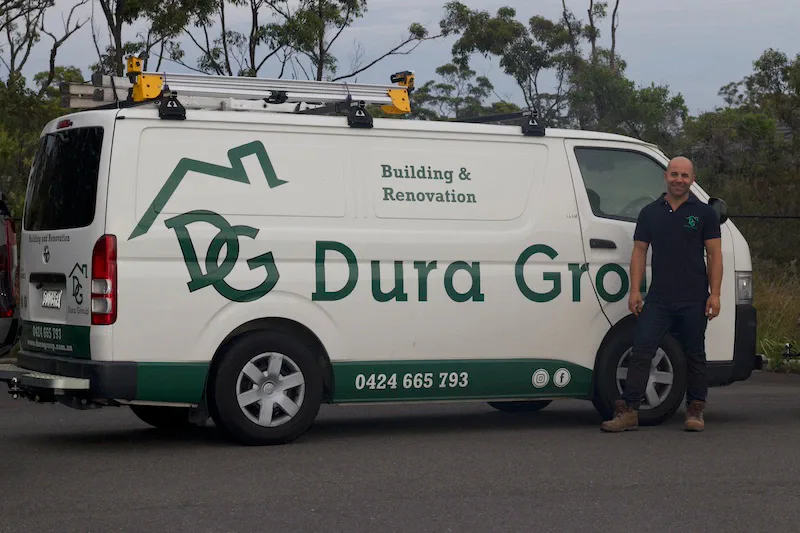
Mark Dura is the founder of Dura Group Building & Renovations, a licensed builder (Lic 381531C) with 27+ years of experience in residential renovations, home extensions, and knockdown rebuilds across Sydney. Mark oversees every project from design through to completion.